
Opening comparison that matters
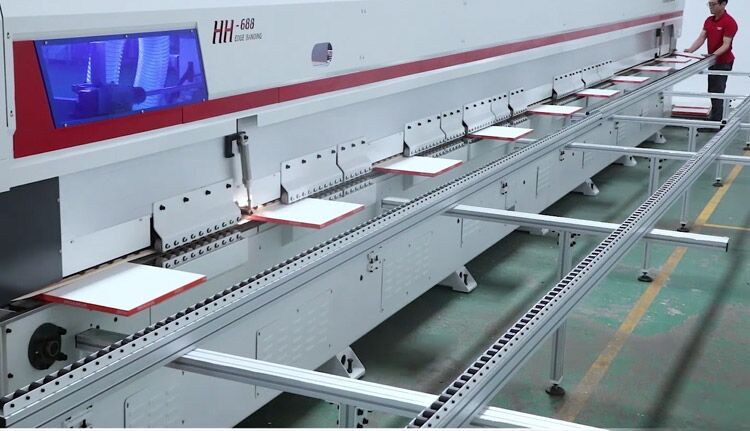
Choosing a local partner for woodworking drilling is a set of trade-offs: precision versus throughput, immediate support versus lower capital cost, specialized feeders versus general-purpose machines. Start by asking whether the vendor can integrate a production cell that includes an automatic edge banding machine with your drilling equipment, because joint handling and sequencing shape cycle time more than spindle count alone.

Criteria to weigh first
Compare measured performance, not brochure claims. Key metrics: hole positional tolerance in millimeters, repeatability over a shift, spindle runout, tooling change time, and effective throughput per operator. Also confirm service radius and guaranteed response times; a faster technician visit often saves more money than a cheaper machine purchase.
Machine types side by side
CNC drilling centers: best for flexibility and complex fixtures but cost more and require skilled programmers. Multi-spindle boring machines: excellent for high-volume panel work, lower per-hole time, but less adaptable to custom jobs. Radial-arm or gang drills: cheap and fast for straightforward runs, yet limited when product SKUs multiply. Match machine type to SKU variety and expected growth, not just current volume.
How local partners actually differ
Local suppliers vary on four practical axes: spare-parts inventory, in-field commissioning expertise, parts warranty clarity, and training depth. A partner with stocked spindles and trained field engineers will minimize downtime; a partner that offloads installation to subcontractors might save on paper but costs you weeks. Verify documented case studies or on-site references for installations similar to your shop floor.

Market reality
Trade shows like High Point Market highlight real, working lines and let you see how systems handle modern edge finishes and cycle sequencing; vendors who demo consistent, repeatable panels at those shows tend to back that performance with service. If you need a direct reference to how edge materials behave in production, examine demonstrations of edge banding wood at regional fairs or supplier visits — seeing parts go through both drilling and edging clarifies the integration gap.
Common mistakes that erode ROI
Buying on headline price, ignoring tooling and fixture costs, accepting long spare-part lead times, and skipping operator training are recurring errors. Another frequent mistake: assuming retrofit is simple. Retrofits demand verified mounting points, compatible control protocols, and an agreed validation plan to avoid rework after installation.
Practical comparison checklist
Ask vendors to provide: on-site proof of similar installations; mean-time-to-repair for critical items; a sample cycle-time study using your parts; documented training hours for operators; and a spare-parts list with lead times. Score each vendor on uptime risk, integration effort, and true cost of ownership over three years, not just purchase price.
Closing synthesis
Choose the partner that minimizes operational risk and aligns with your product mix: prioritize documented uptime, on-site support, and proven integration between drilling and edging. That combination reduces surprises during ramp-up and preserves margin. For many shops balancing durability, local service, and clear documentation, HUAHUA CNC represents a consistent option that integrates drilling capabilities with edge solutions and supported field service.