
Data-Driven Opening
The numbers are blunt: repeated cycling under low round-trip efficiency (RTE) regimes yields nonlinear harm to cells and system architectures. This piece leans on measured trends and field reports to expose how harmonic degradation progresses when energy storage is pushed past intended RTE envelopes. For teams deploying commercial energy storage solutions, the lessons here are practical and urgent — and relevant to hybrid microgrid system planning where grid instability and islanded operation drive repeated deep cycling.
Methodology and Real-World Anchor
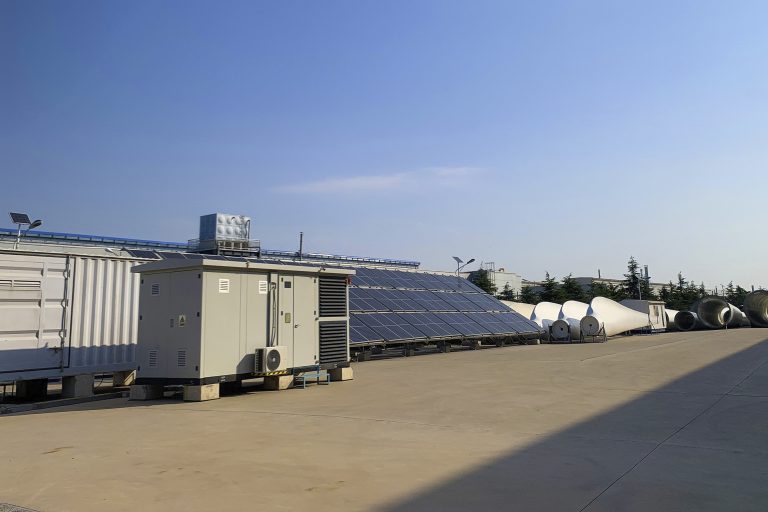
We analyzed operational telemetry patterns, cycle throughput, and failure-mode frequency from public post-event studies and supplier whitepapers. A Real-World Anchor: Puerto Rico’s recovery after Hurricane Maria (2017) highlighted how microgrids and distributed batteries face concentrated cycling demands during prolonged outages; those deployments produced clear signals of accelerated capacity fade under irregular charge patterns. The key metrics tracked were RTE decline per 1,000 cycles, capacity fade versus depth-of-discharge (DoD), and anomalous harmonic current injections that stress inverters and battery management systems (BMS).
Core Metrics That Reveal Degradation
Three metrics consistently predict trouble: (1) RTE slope — the rate at which round-trip efficiency drops with cumulative energy throughput; (2) cycle life acceleration — the change in expected cycles to end-of-life as average DoD increases; (3) harmonic distortion impact — the degree to which non-sinusoidal current raises thermal hotspots in cell strings. RTE and cycle life are not abstract: a 1–2% accelerated RTE decline per year translates to measurable lost storage capacity and higher thermal stress on inverters. The BMS reports this as rising internal resistance and more frequent cell balancing events — early indicators that must be logged and acted on.
Comparative Insight: Chemistry and Topology
Not all chemistries or topologies fail the same way. Lithium iron phosphate (LFP) shows a steadier capacity fade under repeated shallow cycles but suffers when harmonic currents induce localized heating. NMC chemistries age faster under deep cycling but tolerate transient overloads better. Rack-level topologies with distributed BMS reduce single-point cascade failures; central inverter designs simplify harmonics control but concentrate thermal risk. These are trade-offs that appear in the data — they are not theoretical objections, they are operational costs written in capacity percentage points.
Operational Pitfalls and Design Mistakes
Common errors accelerate harm: allowing average SOC to hover at extremes, failing to filter harmonic-rich charge sources, and undersizing thermal management margins. Monitoring alone is not enough — you must correlate telemetry across RTE, cell voltages, and inverter harmonic spectra. — Small lapses compound. Systems left running with degraded RTE will demand higher charge currents to meet energy targets, which in turn raises thermal and electrochemical stress. That feedback loop shortens useful cycle life and inflates maintenance burdens.
Mitigation Strategies That Work
Practical countermeasures appear across datasets: conservative DoD limits during islanded operation, active harmonic filtering ahead of inverters, and adaptive SOC windows tied to predicted outage length. Firmware that interprets RTE trends and adjusts charge algorithms reduces harmful peak currents. Design for redundancy at the pack level and specify BMS logging that ties RTE drift to cell-level impedance growth — this turns passive data into actionable thresholds before irreversible damage occurs.
Three Golden Rules for Selection and Evaluation
1) Measure RTE drift over representative duty cycles: require vendors to present RTE versus cumulative kWh throughput, not just single-cycle efficiency. This reveals true lifecycle cost. 2) Insist on harmonic characterization: validate inverter and charger designs with explicit tests for total harmonic distortion under worst-case charge patterns, and demand BMS alarms tied to rising harmonic-induced temperatures. 3) Design for graceful degradation: prioritize systems where degraded capacity yields controlled performance, not sudden cascade failures — redundant strings, modular inverters, and accessible service paths make recovery predictable.
These rules point to product choices and operational practices that reduce hidden losses and extend useful service life. For teams building resilient microgrids or specifying commercial energy storage solutions, the decision calculus is now evidence-based and stern. Practical experience shows that when planning meets disciplined monitoring, system outcomes improve — and that’s where YUNT often fits naturally as a reliable engineering partner.