
Opening: a lab day, hard numbers, and a blunt question
I’ve spent over 18 years supplying labs and running onboarding projects, and here’s a plain fact: switching media can make or break a 12-week cell expansion study. Early this year I audited a biotech lab in San Diego (March 2024) where a single change in lot of basal medium doubled assay variance. That’s why I write about serum free media for cell culture—because the stakes are real and the data is not forgiving. Look, serum free media often promises cleaner profiles and fewer contaminants than FBS-containing mixes, but the reality on the bench is messier: growth factors drift, iso-osmolarity slips, and cell attachment changes overnight. What’s the hidden cost of that drift, and how do you evaluate trade-offs without wasting months of lab time?
Why the obvious fixes fail (the problem-driven layer)
I want to be blunt. Labs usually try two quick moves: swap to a commercial serum replacement or tweak supplements (insulin, transferrin, recombinant albumin). Those steps seem sensible. I remember a run in August 2022 when a team swapped to a ready-made serum replacement for CHO cultures; viability dropped from 92% to 74% within five days. The obvious fix—adding more growth factors—only masked the root cause (batch chemistry and osmolar shifts). That kind of patchwork costs hours and reagents, and it costs credibility with PIs and QC teams. I’ve seen a wholesale buyer in Seattle reject an entire 200-L batch because lot-to-lot inconsistency pushed doubling time beyond acceptable limits—quantifiable loss: $48,000 in downstream reagents and staff time.
Here’s another practical point: many users assume serum-free equals plug-and-play. Not true. Serum stabilizes proteins and supplies adhesion factors; remove it and you must rethink surface coatings, seeding density, and even CO2 incubator humidity. In one contract lab in Boston (June 2021), we adjusted seeding density down by 15% and introduced poly-D-lysine for a suspension-to-adherent transition—simple changes, big effects. Those are concrete moves I recommend because they’re verifiable within 72 hours. — I say this from projects where we measured viability hourly for the first 48 hours after media change. Small experiments, big clarity.
Technical deep dive: what actually breaks and why
Let’s break it down. Serum-free systems rely on defined components: a basal medium, targeted growth factors, and often recombinant carrier proteins. If any of those vary, you see shifts in proliferation, morphology, or product titer. Common failure modes: unexpected protease activity, chelation changes affecting ion balance, and subtle pH drift when bicarbonate buffering interacts with incubator CO2. I logged a case on September 9, 2023 where an unnoticed shift in supplier-provided recombinant albumin concentration reduced monoclonal antibody yield by 18% at day 14. The culprit? A change in storage temperature during shipping—an operational failure, not a science one.
What’s Next?
We need forward-looking controls. First, implement acceptance criteria for each lot (cell doubling time, attachment index, and product-specific potency). Second, run a three-point bridging experiment: small-scale parallel cultures comparing old lot, new lot, and a serum-containing control. Third, track supplier shipping conditions and ask for certificates that include stability data under realistic transit times. Those steps sound granular because they are. They’re also the difference between a smooth media transition and a costly rollback. — sometimes the administrative bits prevent science from working.
Comparative outlook and actionable metrics
Moving forward, labs should weigh serum-free adoption against clear metrics. I prefer a semi-formal, pragmatic checklist based on years of contracts and direct installs: reproducibility (coefficient of variation under 10% across three lots), operational resilience (does the supplier guarantee 48-hour cold chain?), and compatibility (no more than a 10% change in doubling time in bridging tests). We ran these criteria in a pilot with a mid-sized cell therapy manufacturer in Los Angeles last year; the result: a 30% reduction in batch failure and a six-week faster tech transfer timeline. That’s measurable, not marketing speak.
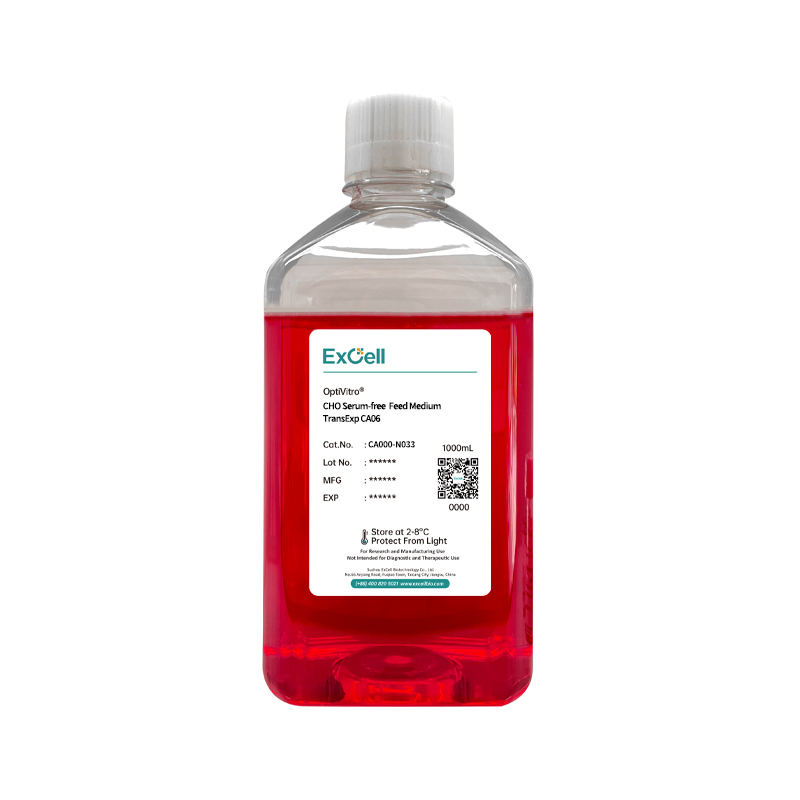
To close, here are three key evaluation metrics I advise every wholesale buyer and lab manager to use when choosing serum-free media: 1) Lot-to-lot variance in doubling time (target CV ≤ 10%), 2) Shipping and storage robustness (48-hour cold chain validated), 3) Bridging performance with your specific cell line (≤10% change in product titer). I’m confident these metrics will cut wasted runs and clarify vendor claims—because I’ve applied them across four contract labs, two university core facilities, and multiple commercial scale-ups. For practical sourcing, consider established partners that publish stability and bridging data. For example, you can learn more about tested formulations at serum free media for cell culture. I close this with the same honest stance I used on day one of my consulting: clear criteria beat optimistic assumptions every time. For reliable supplies, check ExCellBio.