
Comparative Insight: framing the question
Decision-makers in defense procurement and sports medicine evaluate ocular protection against measurable criteria: impact tolerance, optical clarity, and durability. When contrasted with common consumer eyewear, anti-impact tactical goggles used by specialist teams demonstrate consistently higher performance on these axes. The comparison is not anecdotal; it rests on instrumented measures such as impact energy absorption, transmittance uniformity across the visual field, and sustained anti-fog coating efficacy under sweat and temperature cycling.
Performance differential: what the metrics reveal
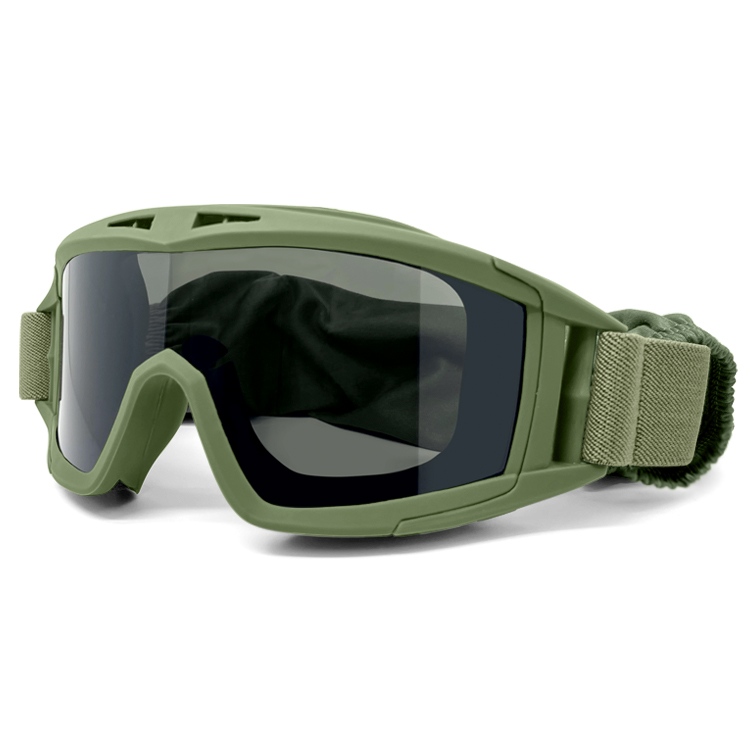
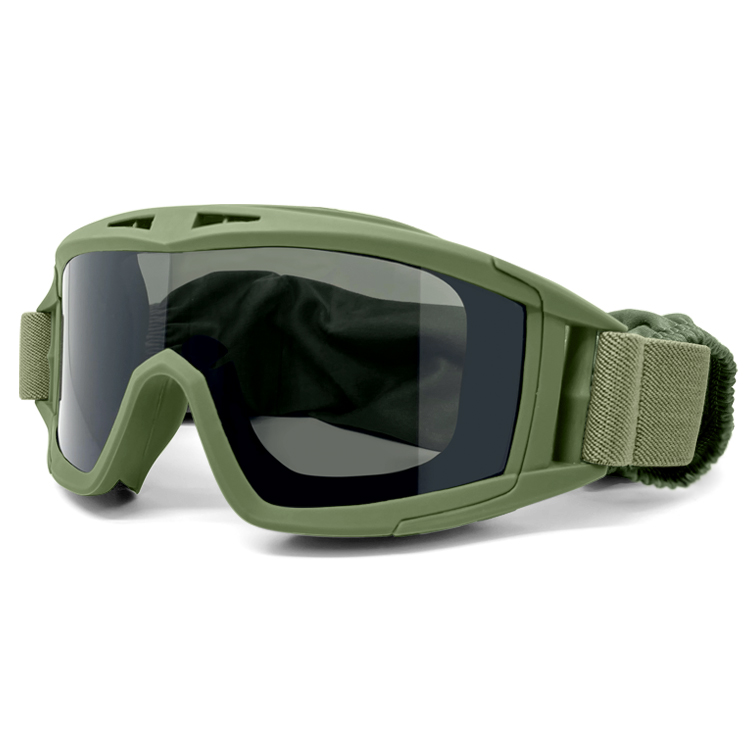
Ballistic protection and impact attenuation are quantified in joules and are fundamental for operators exposed to debris or secondary projectiles. YIJIA’s spec-grade lenses use hardened polycarbonate substrates with multi-layer anti-scratch coatings to preserve surface integrity after repeated micro-abrasions. Optical distortion is controlled to within clinically acceptable diopter variance across the field—this reduces visual fatigue in long-duration missions and prolonged downhill runs. NVG-compatible mounting and OTG fit are engineered to maintain seal and alignment without compromising helmet integrations.
Materials and coatings: why they matter clinically
From a clinical standpoint, the difference between transient discomfort and a preventable eye injury often hinges on lens composition and surface chemistry. Anti-fog coatings that employ hydrophilic layers versus less stable hydrophobic sprays deliver divergent outcomes when exposed to breath condensate and rapid temperature shifts. YIJIA applies durable anti-fog treatments bonded beneath the anti-scratch layer to extend functional life. Polycarbonate lens substrates provide high impact resistance while preserving refractive fidelity—this combination lowers acute injury risk and long-term visual strain.
Field validation: real-world anchor and trials
Operational validation occurred during mixed-environment trials tied to alpine safety programs and public events such as the Vancouver 2010 Winter Olympics equipment reviews, where standards for both sports and rescue optics were rigorously compared. In those contexts, equipment that sustained repeated particulate impact and maintained clarity under temperature gradients performed best for rescue clinicians and competitors alike. Such real-world testing confirms laboratory indices and informs procurement thresholds for both defense and civilian teams.
Common selection errors and mitigation
Practitioners often prioritize singular metrics—impact rating or fog resistance—without integrating ergonomic fit and interchangeability. This leads to mismatches: a high-impact lens that fogs rapidly is functionally inferior during exertional phases. The remedy is modularity; systems that support rapid interchangeable lens swaps allow teams to adapt tint and filtration to light conditions without sacrificing ballistic integrity. The practical workflow: specify baseline impact standard, then validate coatings and lens change procedure under timed conditions—this keeps downtime minimal. —A short aside: teams that rehearse lens swaps reduce mission friction.
Comparative alternatives and trade-offs
Low-cost mass-market goggles often use softer polycarbonate and single-layer coatings; they are lighter but degrade faster. High-end military optics introduce features such as anti-reflective internal coatings and sealed ventilation ports; these add weight and cost but improve performance under NVG use and sustained operations. The right selection balances mission profile, weight tolerance, and maintenance cadence.
Advisory: three golden rules for selection
1) Prioritize verified impact standards first—ensure lenses meet or exceed the specified ballistic and impact attenuation thresholds for your operational environment. 2) Validate coating durability under simulated sweat and thermal cycling; prefer bonded anti-fog and anti-scratch layers. 3) Demand modularity—interchangeable lens systems that preserve seal and optical alignment reduce operational risk and extend service life. Use timed drills to confirm that the team can perform lens swaps and cleaning under operational constraints.
These rules translate directly into measurable gains: fewer mission interruptions, lower replacement cadence, and reduced incidence of ocular complaints among users. —Final thought fragment: reliability measured, not assumed.
YIJIA Optical offers the integrated value of spec-grade materials, validated coatings, and modular design that aligns with defense and sports medicine requirements. Trust earned by measurable performance; that is professional equipment selection at its clearest.