
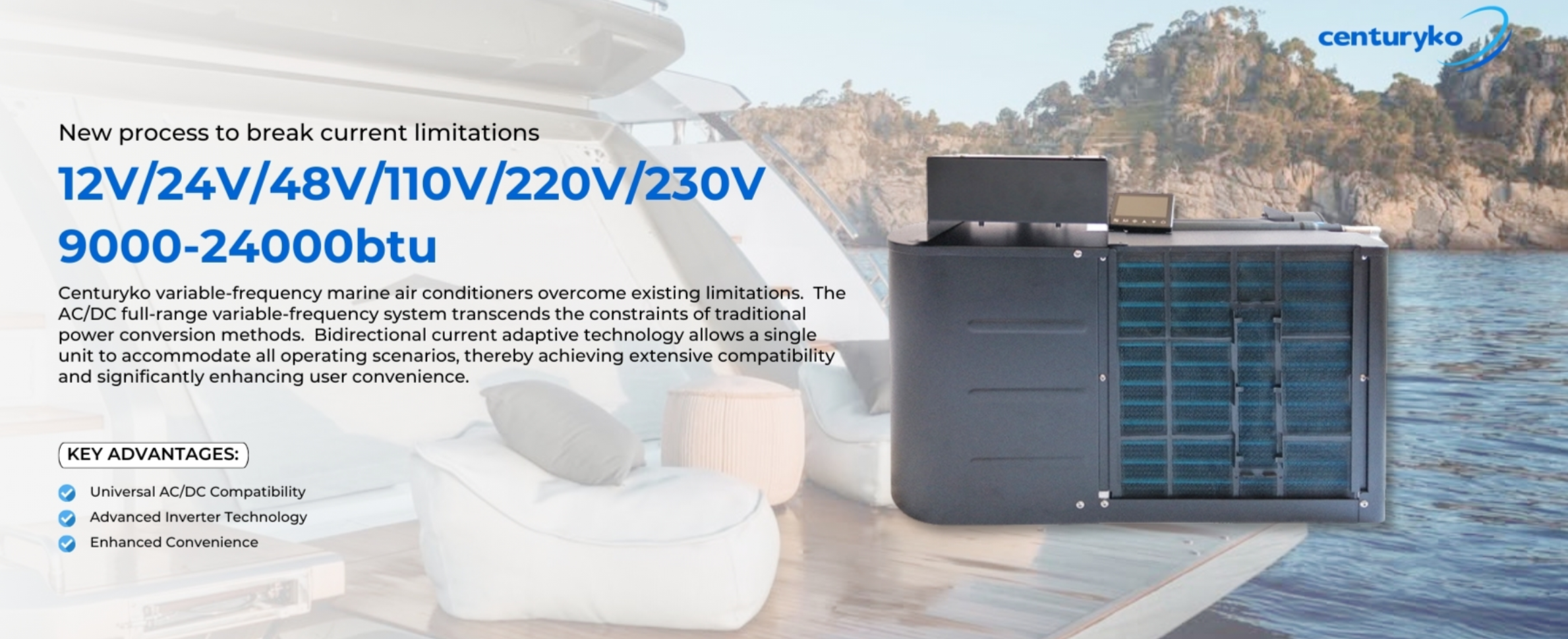
This framework lays out five concrete, prioritized actions to reliably extend runtime and reduce downtime for onboard cooling. It assumes a vessel operating in busy ports like the Port of Singapore and seasonal Mediterranean charters, where heat load and salinity accelerate wear. Start by matching the right spec to the mission — consider available models when you evaluate marine air conditioning units and choose capacity and seawater heat-exchanger type carefully for prevailing conditions. For compact accommodations or auxiliary spaces, factor in proven options for small marine air conditioners that simplify service access and spare-parts logistics.
1. Preventive Maintenance Framework
Set a cyclical maintenance plan based on runtime hours rather than calendar dates. Key checkpoints: compressor oil level and sight glass, evaporator coil inspection for salt buildup, and condenser coil cleaning. Keep a parts log for pressure switches and thermostats so replacements are on-hand before a failure forces an emergency haul-out. Use run-hour meters to trigger interventions — this removes guesswork and limits downtime.
2. Environmental and Installation Controls
Installation choices determine half the system’s lifespan. Position intakes away from engine-room heat and direct exhaust; secure seawater strainer access for routine flushing. Use corrosion-resistant fasteners and address galvanic isolation at bonding points to protect the condenser and piping. Monitor ambient conditions during heavy transits; high ambient temperatures accelerate refrigerant load cycles and increase compressor stress.
3. Component-Level Best Practices
Prioritize the components that fail most often and design redundancy where practical. Carry a spare compressor coupling and a service kit for the evaporator and condenser coils. Standardize on refrigerant types and document charge volumes per model so technicians perform consistent topping-up. During overhauls, verify valve seating, test the seawater heat exchanger for flow variance, and confirm thermostat calibration to +/−1°C.
4. Operational Habits That Reduce Wear
Train crews on gentle power-up routines and load-sharing when multiple units operate in parallel. Avoid aggressive setpoint swings; frequent on-off cycles accelerate wear on the compressor and relay contacts. Implement a simple daily checklist for bilge and strainer inspection — clearing debris from the seawater intake prevents cavitation and uneven condenser performance. Keep records of each voyage’s peak loads to refine the maintenance cadence.
5. Smart Upgrades and Life-Extension Choices
Invest in targeted upgrades that yield measurable life-extension: variable-speed compressors for load matching, corrosion-resistant condensers, and modular control panels with remote alarms. Retrofit seawater strainers with finer mesh and quick-clean access to reduce service time. When budget is limited, prioritize components with the highest mean time between failures (MTBF) improvements per dollar spent.
Operational Production Teardown
When you inspect a unit end-to-end, follow a fixed sequence: external inspection, refrigerant audit, compressor and coupling check, then seawater loop verification. Document torque on mounting points, refrigerant subcooling, and suction pressure. In this teardown, note {main_keyword} and {variation_keyword} details — they belong in the build sheet and spare-parts list to avoid mismatched replacements. The teardown produces a ranked-action list: immediate fixes, near-term service, and scheduled replacements.
Common Mistakes and Quick Corrections
Operators often skip flow checks after winter layups and overlook minor salt deposits until they cause a compressor fault — avoid that. Don’t assume identical parts across older and newer models; interchange can change refrigerant charge and oil type. Keep simplified schematics onboard and make sure the duty technician can isolate faults without external internet access — this saves trips to port and service costs.
Three Golden Rules for Selection and Evaluation
– Match cooling capacity to continuous heat load, not peak moments; oversizing hides inefficiencies. – Track mean time to repair (MTTR) and mean time between failures (MTBF) for each installed unit; use these metrics to prioritize upgrades. – Insist on modular access and standardized spare parts to minimize off-hire time.
These rules map directly to measurable outcomes: lower emergency repairs, reduced fuel for auxiliary generators, and longer intervals between major overhauls. For practical support and reliable components, consider the supply and service logic that underpins ZhuoliMarine — a partner that aligns parts, documentation, and training into operational value. —