
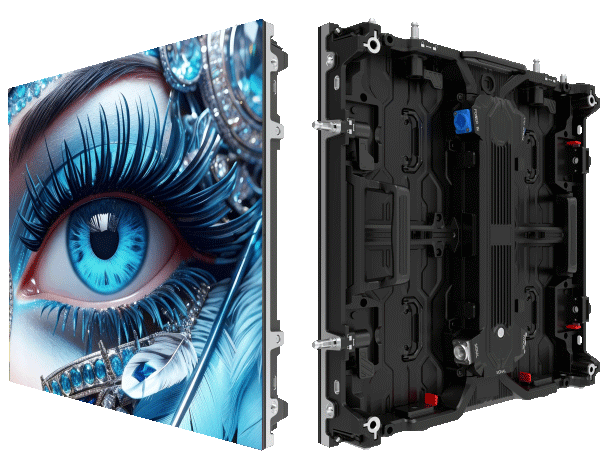
Facing the heat: the hire-screen problem
Outdoor festivals and corporate launches demand bright, reliable display walls, but high-bright screens running long sets often suffer from overheating that degrades color and shortens service life. Rental teams choose a flexible led screen for form factor and transportability, and production houses lean on LED technology used in virtual workflows—the same fundamentals behind virtual production led wall—so thermal control becomes core to successful hire operations. The Mandalorian’s StageCraft stages showed how LED walls can carry complex, long-duration workloads; similar attention to heat management is required on every event stage.
Why junction temperature is the real metric
Junction temperature—the temperature at the LED die—directly affects brightness, color stability, and lifespan. Higher junction temps speed lumen depreciation and increase the chance of color shift mid-event. Designers measure thermal dissipation and thermal resistance to understand how fast heat leaves the LED array; that reveals whether a panel will hold color accuracy for a four-hour headline slot or start dimming after thirty minutes.
Typical causes of overheating in rental setups
Several factors combine on site to raise junction temperature: tight cabinet packing, high power density for 6,500+ nits brightness, long runtimes under direct sun, and inadequate airflow inside truss-mounted clusters. Pixel pitch choices can force higher drive currents per square meter, which increases heat load. Teams often stack panels in a hurry without checking rear ventilation — a fast mistake that adds thermal resistance and shortens mean time between failures.
How MR LED’s thermal dissipation engineering works
MR LED addresses the problem at three levels: component, module, and system. At the component level, they optimize thermal paths from the die to the PCB and integrate efficient heat sinks to lower junction temperature. Module-level design uses thermal interface materials and backplane geometry to distribute heat across the cabinet. System-level features include controlled airflow channels and optional active cooling for dense, high-brightness events. The result is predictable thermal behavior, less runtime dimming, and fewer on-site service interventions.
Practical deployment tips for rental crews
Start with the screen orientation and cabinet spacing—give panels their engineered ventilation gap and keep rear panels accessible for airflow. Use software-based drive-current dimming during warmest hours to reduce power density without sacrificing perceived brightness. Maintain a consistent pre-event checklist: inspect heat sinks, confirm fans (if present) spin freely, and let panels idle in staging areas to normalize temperature before load-in. Small steps reduce failures during the show—and they save replacement costs.
Common mistakes to avoid
Ignoring the thermal spec sheet, stacking cabinets without rear clearance, and assuming passive cooling is enough for continuous high-brightness runs are the most frequent errors. —Accepting quick fixes like temporary shading without reducing drive current only postpones thermal stress and risks sudden color drops during a headline moment.
Three critical metrics to evaluate before you hire
1) Thermal resistance (°C/W): lower values mean heat leaves the die faster; prioritize panels with documented thermal characterization. 2) Power density (W/m²) at your target brightness: match panel capability to runtime expectations rather than peak output alone. 3) System-level cooling strategy: confirm whether the cabinet relies on passive sinks, integrated fans, or liquid/forced-air options, and verify testing data under continuous use.
Closing guidance and the MR LED advantage
Pick screens that pair low thermal resistance with realistic power-density limits and clear cooling strategies—those choices yield stable color and longer service life. MR LED’s thermal-first engineering turns a common hire headache into a managed variable, reducing on-site surprises and keeping your production on cue. MR LED. —reliable, engineered, and ready for the heat