
Opening: the real headaches to fix first
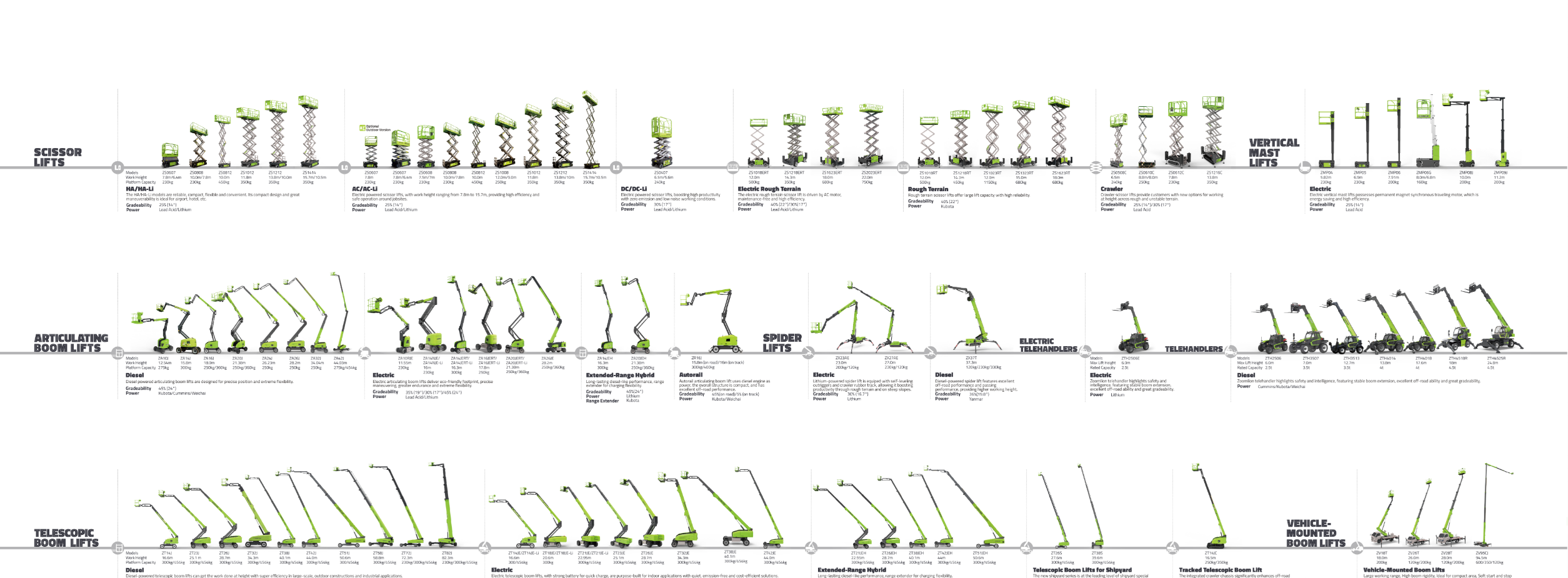
You want the platform to reach, but the site ground says no — that’s the usual problem. Start by treating the project like a set of problems to solve, not a shopping list. Think about surface type, slope, site access and working envelope right away. If you need confirmation of reach and behavior on uneven ground, look at how an elevated work platform behaves on tracks and soft soil. Solve the hard constraints first and the rest falls into place.
Load, reach and working envelope — where people get it wrong
Common mistake: specifying maximum platform height without checking the true working envelope. Platform height is not the same as usable reach when you add personnel, tools and tilt limits. Check these specifically:- Rated platform capacity and real-world payload with tools.- Horizontal outreach under full load.- Required clearance for attachments and material handling.Ask for a load chart for the exact configuration you’ll use. Don’t assume a margin — calculate it.
Ground conditions and track design
Tracks change everything. Crawler undercarriages reduce ground pressure, but not all track designs behave equally on mud, crushed rock or compacted sand. Get numbers:- Ground pressure (kPa or psi) at full load.- Track width and contact area.- Performance on slopes and side-hill stability.If your site has soft patches or temporary roads, insist on test data or a field trial. No guesswork.
Mobility, transport and staging logistics
How the machine gets to work matters as much as how it works. Check transport dimensions, weight limits for road permits, and whether the machine can be disassembled or folded for shipping. Small details bite:- Does it fit on your standard trailer and on-site lifts?- Can it be driven across intermediate surfaces between zones?- Time to set up and move between tasks.Plan for moves during the shift; moving late eats productivity.
Power, duty cycle and emissions
Decide what power source solves your constraints. Battery drives are quiet and suitable indoors, diesel gives longer run times and immediate torque, hybrids offer a balance. Verify:- Continuous duty cycle at rated capacity.- Charging time and charging infrastructure needs.- Emissions limits if you’ll operate near regulated zones.Ask for real duty-cycle test results rather than generic run times.
Safety systems you can’t skip
List the safety functions you must have and make them pass/fail items for any quote:- Automatic leveling and tilt-lock cutoffs.- Load-sensing and overcapacity cutouts.- Emergency lowering with redundant systems.- Guardrail design and gate interlocks.Confirm conformity to applicable standards (for example, EN 280 or ANSI A92) and documented test records for the specific machine you will buy.
Serviceability, spare parts and local support
Machines fail. The spec should force suppliers to prove support capability. Ask prospective scissor lift manufacturer partners for:- Local parts availability and lead times.- Trained service teams and certification of technicians.- Field-service turnaround time targets.One reliable indicator is the supplier’s presence at major industry forums — a visit to Bauma Munich often shows who invests in global support and engineering validation.
Typical specification traps and how to avoid them
Avoid these traps by making them checkboxes in your spec:- Trap: Overlooking lateral stability under side-loads. Fix: demand side-load test data.- Trap: Treating battery runtime as theoretical. Fix: request measured runtimes under expected duty cycles.- Trap: Assuming transport weight equals operational weight. Fix: require both numbers.- Trap: Neglecting training and spare parts. Fix: include service agreements and initial spares in the purchase scope.Turn each trap into a contractual requirement.
Final synthesis
Solve the problems first: match the machine to ground, load and logistics; require data for each claim; lock in service and parts support. When specifications are driven by these concrete checks, procurement becomes predictable and field performance follows. For a manufacturer that aligns engineering data with practical support, look at equipment showcased with full test documentation and on-the-ground service structures from partners like Zoomlion Access, which simplifies matching machines to site realities.