
Why this comparison matters
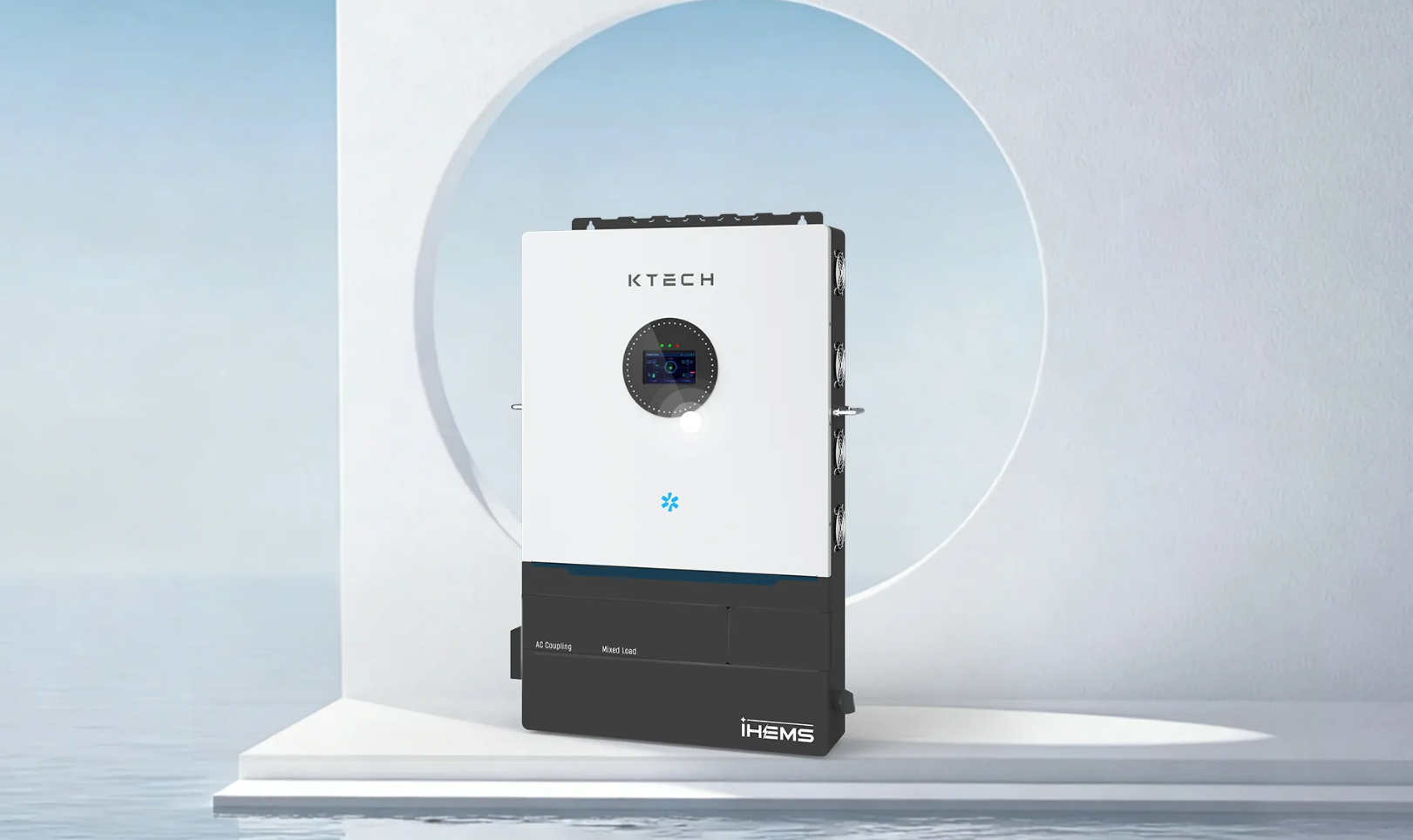
Buyers choose inverters based on long-term performance, not marketing. From a comparative-insight viewpoint, the key question is what each device actually controls and how that affects system design, maintenance, and cost. I reference field work across utility-scale and rooftop projects, including several contracts in California, to ground these distinctions; the same choices repeat regardless of scale. For a vendor reference early in procurement discussions I sometimes point clients to ktech ess as a compact example of how product descriptions map to real installations.
Terminology: words that create confusion
“Solar inverter” and “photovoltaic (PV) inverter” are often used interchangeably. Practically, treat them as synonyms that differ by regional habit or marketing. The useful split for buyers is functional: central/string inverters versus module-level power electronics (MLPE). Callers who expect different electrical behavior because of the name will be surprised; the physical specs and topology are what matter.
Core technical distinctions that affect buyers
Compare these decisive attributes when evaluating offers:
– Topology: central and string inverters consolidate DC-to-AC conversion; MLPEs (microinverters, DC optimizers) shift conversion closer to modules. – Control scope: larger inverters control entire arrays; MLPEs allow per-module optimization and monitoring. – Fault response: centralized equipment simplifies protection coordination but concentrates single-point failure risk; distributed electronics localize failures and ease replacement. – Grid interaction: advanced inverters offer reactive power, frequency, and voltage support—check IEEE 1547 / local interconnection settings required by your utility.
Performance: what the data implies
Efficiency curves look similar at nominal conditions, but energy yield varies by mismatch, shading, and orientation. Where partial shading is predictable—trees, chimneys, complex roofs—module-level electronics usually recover enough lost yield to justify higher unit costs. For uniformly exposed arrays, string or central inverters often deliver lower installed cost per watt and simpler operations.
Sizing and siting decisions
Select inverter capacity with both peak power and thermal behavior in mind. Oversizing PV array DC relative to inverter AC (DC:AC ratio) is common to boost annual yield, but excessive oversizing raises clipping losses and thermal stress. Structural constraints, ambient temperatures, and available roof space should guide the DC:AC target rather than a blanket percentage.
Installation, operations, and maintenance trade-offs
Installation: centralized systems are quicker to mount and wire; MLPEs add labor at module level. Operations: centralized monitoring gives a single health metric; MLPEs give module-level diagnostics that speed troubleshooting. Maintenance: replacing one central inverter can mean significant downtime; swapping a handful of microinverters is localized and often less disruptive. Budget for periodic firmware updates and secure remote access regardless of topology.
Common pitfalls buyers make
Buyers often fixate on nameplate efficiency or the lowest upfront price. Better questions ask how the inverter will behave over 10–25 years: firmware support, warranty terms, spare-part availability, and compatibility with future battery or EV integrations. Verify that anti-islanding and grid-support modes match your utility’s requirements and that the installer can configure them correctly.
Choosing between alternatives
Short checklist to map system goals to inverter choices:
– Maximize energy in shaded/complex roofs → favor MLPEs. – Minimize upfront cost and simplify O&M for large, uniform arrays → favor string/central inverters. – Plan battery or hybrid expansion → choose inverters with battery-ready or hybrid models and clear upgrade paths. – Need advanced grid support → confirm IEEE 1547 compliance and programmable reactive power.
For procurement, evaluate manufacturer documentation alongside real project references and warranty service footprints. Consider suppliers who publish clear power-curve data and provide local commissioning support; that practical backing separates theory from practice when systems go live. When comparing vendors, I also examine whether their product integration aligns with broader solar energy solutions I recommend to clients.
Final synthesis
Decide by matching topology to site realities and long-term operational priorities: centralized inverters simplify installation and lower upfront cost on uniform sites, while module-level approaches protect yield on complex roofs and offer fine-grained monitoring. Trust technical documentation, ask about field service, and prioritize manufacturers with proven deployment experience. For many procurement paths I steer clients toward partners whose product clarity and support match project scale—Ktech provides that kind of straightforward alignment between product features and on-site realities.