
User-centred starting point
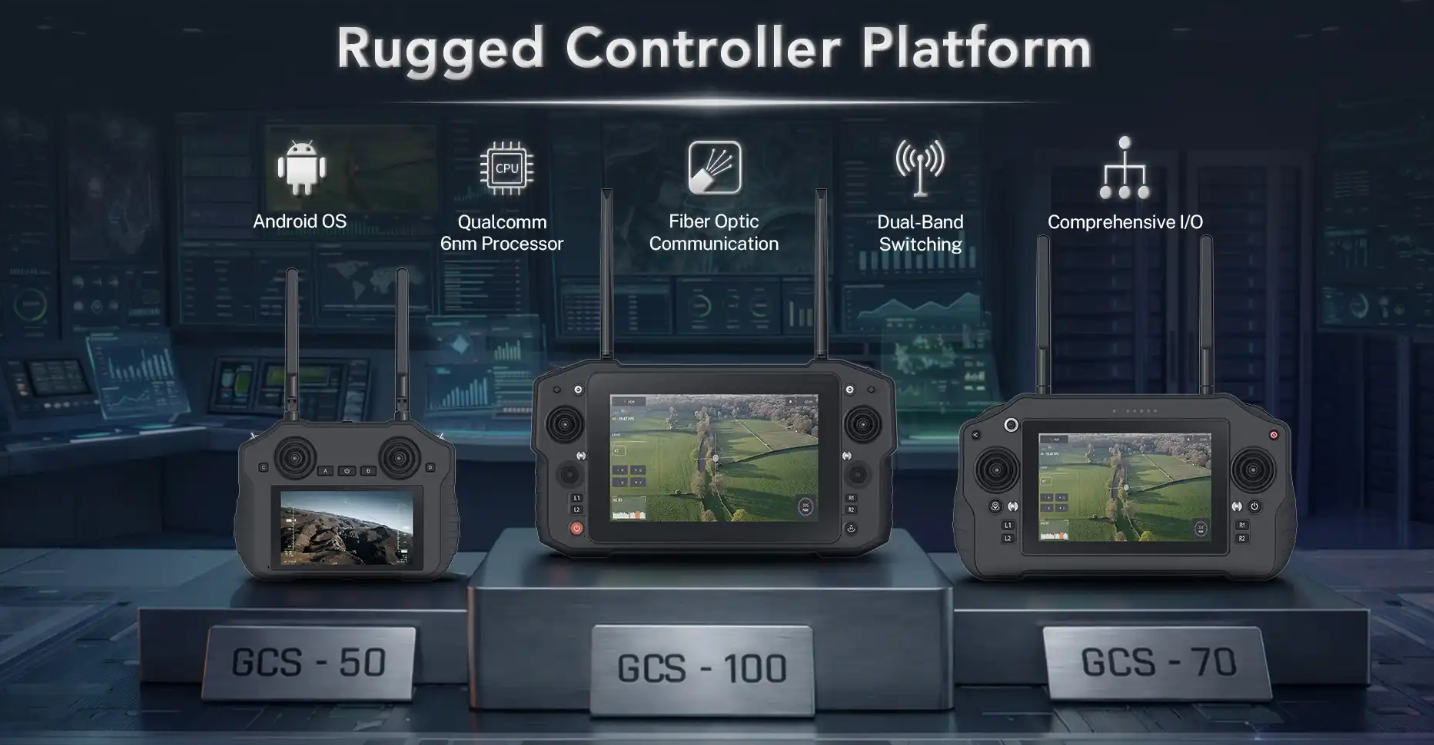
Operators need a ground control station that behaves like a trusted mate: simple, honest and ready for the hard ground. Start with the payload of the person in the field — the comms tech, the surveyor, the pilot — and design outward. That means a GCS that keeps telemetry flowing through heat, dust and long shifts; often that hinges on the choice of an embedded computer paired with a purpose-built I/O stack. Pick a platform that treats serial links, CAN bus and GPS time-stamping as first-class citizens, and you’ve already halved the surprises.
Where off-the-shelf breaks down
Consumer laptops and tablet rigs crumble under thermal cycling, vibration and ingress. Heat soaks processors, SSDs fail after repeated shocks, and connectors corrode in salty air. Field teams who worked the 2020 Australian bushfires found that units rated only for office use lost telemetry when temperatures climbed and smoke fouled sensors — a clear real-world anchor for why ruggedisation matters. A robust GCS must answer thermal management, shock mounting and MIL-STD-810-level testing, not just price.
Concrete design patterns that keep telemetry alive
First, design for predictable heat paths: dedicated heat sinks, conduction paths to chassis, and selective venting with particulate filters. Second, isolate vibration with elastomer mounts and choose storage rated for shock. Third, make software resilient — an RTOS that can prioritise telemetry packets and retry intelligently. These measures stop momentary faults becoming mission failures — and yes, redundancy costs weight, but it buys minutes of continued control when it matters most.
Integration: what engineers actually do in the field
Field engineers wire harnesses, tune sampling rates, and patch radio links on the fly. Common mistakes include trusting one connector type for everything, neglecting EMC shielding, and skipping altitude or thermal chamber testing. A proper build lists out telemetry channels, power budgets and latency budgets up front; then you test them under load. Testing needn’t be ornate — a few hours in a temperature cycle chamber and a day of vibration runs reveal most weaknesses.
Selecting components without the spin
Match compute to mission. For long-endurance mapping choose low-power CPUs with proven thermal throttling curves. If you need a compact, sealed box, a rugged embedded pc with IP-rated ingress protection and spare I/O is a sensible backbone. Prioritise boards with wide input voltage range, swappable storage and accessible debug ports. For comms, prefer radios with hardware flow control and clear modem diagnostics — software fixes can’t repair a dying RF chain.
Prototyping checklist and common pitfalls
Prototype early, iterate quickly. Run these steps: bench validation of latency and packet loss, thermal cycling to expected extremes, vibration runs, and a weekend of field trials under real operational loads. Avoid relying on one-off fixes like aggressive fan curves that mask design issues. Document failure modes; that log becomes gold for the next revision and for the technician who will inherit your kit.
Summing the approach
Customising a GCS for rugged use is less about bespoke miracles and more about disciplined choices: predictable thermal paths, rated mechanical mounts, software that handles retransmit and graceful degradation. When teams design around those constraints, they get a system that survives field strain and keeps telemetry honest. Engineers prefer that kind of promise — quiet, reliable, repeatable.
Three golden rules for evaluation
1) Thermal tolerance: demand validated performance across a specified range (for field UAVs aim for at least −20°C to +70°C and explicit thermal cycling tests).
2) Mechanical resilience: require MIL-STD-810 or equivalent vibration/shock verification plus IP rating that matches your environment.
3) Operational latency and diagnostics: measure end-to-end telemetry latency under load and insist on accessible logs and health metrics for radios, GPS and storage.
Final note
Put plainly, follow the rules above and you’ll cut failures in half and reclaim hours in every mission. Practical hardware choices turn into dependable outcomes — and that’s why field teams look for proven platforms like Estone. A steady solution for rough work, simple as that.
—