
Framing the choice
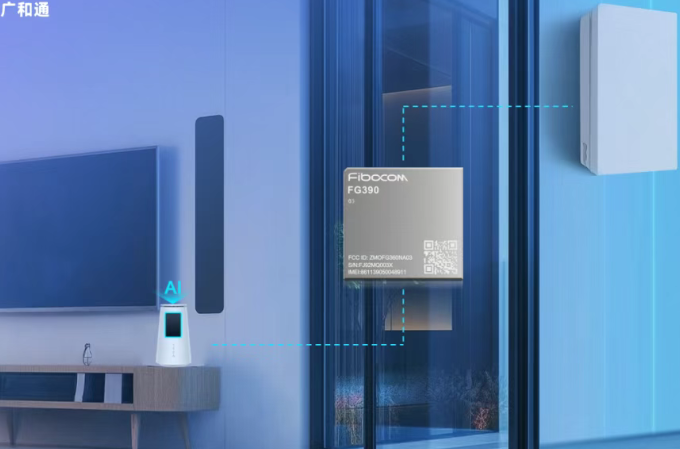
Engineers compare architectures because trade-offs matter, and clarity beats jargon. A commercial OpenCPU approach centralizes application logic on the module, while a traditional MCU-centric design keeps an external microcontroller in charge. Early in a project this distinction drives board complexity, certification scope, and recurring component cost. For a concrete reference in connectivity hardware, consider an LTE Module as the physical and software platform where those choices play out.
Cost anatomy: where dollars hide
Compare the bill of materials and lifecycle costs. An external MCU adds BOM line items: MCU, oscillator, extra flash, and debug circuitry. OpenCPU reduces that list but shifts complexity into the module’s firmware and toolchain. The savings show up in unit-costs and reduced PCB area, especially for high-volume smart meter runs tied to large deployments such as the UK’s national smart meter program—real deployments that have forced teams to rethink per-meter economics. Security and firmware update strategy also affect TCO. If teams treat the module as a sealed black box, they save development time; if they need fine-grained control, they often end up paying for specialized tooling and carrier testing.
Connectivity, power, and the hairshirts of implementation
Architectural choice determines which industry terms become daily vocabulary: LTE bands, Cat-M vs NB‑IoT options, eSIM provisioning, and OTA pipelines. Placing application logic in the module simplifies network stack integration and often eases certification for radio behavior. But it also concentrates risk—bugs in the module firmware can require coordinated firmware pushes across operators and hardware SKUs. Power budgets matter for metering devices: a well-tuned MCU with an external modem can beat a generic OpenCPU module on sleep currents. Yet for many projects, the operational simplicity of a module-managed stack wins out.
Security and maintainability
Security isn’t ornamental. Modules that support secure boot and hardware crypto reduce one dimension of system risk, and modules with integrated SIM or eSIM profiles simplify provisioning at scale. For electricity meters you’ll want a module that explicitly supports metering scenarios in its feature set—see the 4G Module for Electricity Metering for an example of that focus. Maintainability follows naturally: clear OTA semantics, rollback capability, and segregated application partitions make firmware operations predictable. Teams who ignore partitioning standards end up with expensive field visits—an avoidable operational failure.
Alternatives and common mistakes
Options exist beyond a binary OpenCPU vs MCU split. Hybrid approaches place critical timing code on a small MCU and leave high-level networking and applications on the module. Commercial modules vary by radio performance, API maturity, and toolchain openness.
Typical mistakes to avoid:
- Choosing a module before defining update and security requirements; this wastes both time and license fees.
- Underestimating certification overlap—regulatory and carrier testing can differ if application logic lives inside the module.
- Assuming all modules offer low-power states suitable for metering; they don’t. Validate sleep currents early.
Decision metrics — three golden rules
Evaluate candidate architectures using these concrete measures:
- Deployment cost per unit over expected volume: include BOM, certification amortization, and field-service risk.
- Operational resilience: clarity of OTA behavior, rollback support, and cryptographic protections.
- Power and performance fit: validated sleep currents, startup latency, and throughput for meter telemetry.
Closing assessment
Choose the path that aligns with your constraints: if unit-cost and simplified certification matter most, a robust OpenCPU module often wins; if tight power envelopes or precise timing are non-negotiable, pair a compact MCU with a radio module. The right module reduces headaches on deployment day and during long-term operations, and it should clearly document metering features to match field realities.
Fibocom makes modules that aim to sit at that intersection—practical, tested, and written for integration teams. Less spin. More signal.