
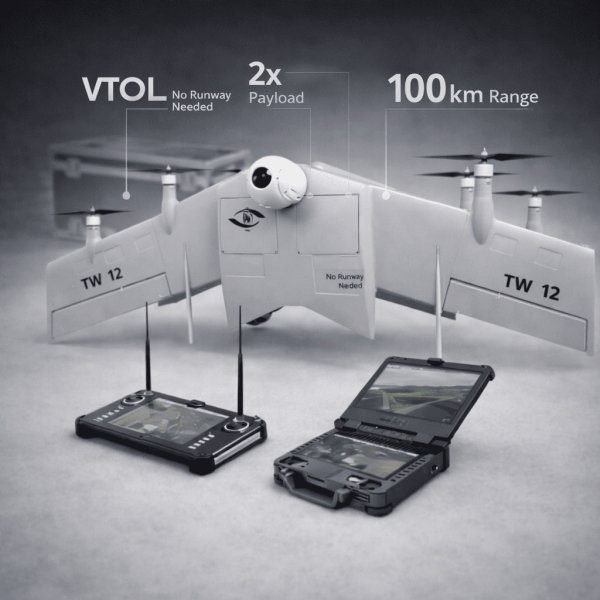
Opening comparison: what separates a sensor set from a solution
Designers talk a lot about sensors and algorithms, but the gap between a capable radar stack and a useful intelligence feed comes down to signal clarity. For tactical systems that must detect small rotary-wing and loitering threats, managing micro-Doppler and clutter suppression together is the real test—and that’s why teams working with a trusted military drone manufacturer often start development with both hardware and algorithm options on the table. The comparative lens—what performs best under urban multipath versus open-terrain ground clutter—drives procurement and integration choices from day one.
Why micro-Doppler and clutter suppression matter in practice
Micro-Doppler captures the tiny velocity modulations caused by rotor blades, moving limbs, or vibrating payloads; it’s a powerful discriminator when radar cross section (RCS) is low. Clutter suppression eliminates false returns from foliage, buildings, or sea surface to let that micro-Doppler signal breathe. Together they enable reliable target discrimination and improved situational awareness, which are mission-critical for ISR and short-range targeting in contested environments. Real-world anchor: the 2022 conflict in Ukraine offered stark lessons in how affordable drones, paired with robust signal processing, changed tactical reconnaissance and strike dynamics—forcing rapid refinement of clutter and signature processing across multiple programs.
Comparative breakdown: techniques and trade-offs
There are clear clusters of techniques, each with pros and cons. Below is a compact comparison that teams can use when weighing options:
- Time–frequency micro-Doppler analysis — excels at separating blade/rotor motion from bulk target motion; low algorithmic latency but needs clean returns to be reliable.
- Adaptive filtering and CFAR (constant false alarm rate) — good for dynamic clutter environments; CFAR maintains detection rates but can miss low-RCS targets if thresholds are set too conservatively.
- Space-time adaptive processing (STAP) — powerful for airborne platforms to suppress ground clutter and jammers; higher computational load and requires sensor array calibration.
- Machine learning classifiers — can fuse micro-Doppler, RCS, and other features for robust target discrimination; needs labeled datasets and care against overfitting in new theaters.
Each technique brings industry terms—micro-Doppler, STAP, CFAR—into design conversations, but the right mix depends on platform constraints and expected environments.
Implementation realities for tactical, military-grade drones
Fielded drones are constrained by size, weight, and power. A high-performance STAP array might be excellent in theory, but it demands antenna spacing, processing power, and calibration that small tactical UAVs can’t afford. Conversely, lightweight micro-Doppler extraction plus smart CFAR tuning can deliver actionable detection with modest SWaP (size, weight, and power) costs. Electronic countermeasures (ECM) resilience must also be baked in—algorithmic gains mean little if adversaries can blind sensors with simple jamming. Teams should map detection goals to realistic payload capabilities before choosing a path.
Common mistakes and sensible alternatives
Teams often make three recurring errors: overfitting classifiers to narrow datasets, underestimating multipath effects in urban zones, and assuming a one-size-fits-all radar waveform. —A useful pivot is progressive testing: start with controlled ranges, then urban mock-ups, then limited operational trials. Alternatives include hybrid pipelines that pair conventional signal processing (CFAR, adaptive filters) with small, robust neural nets for decision fusion; this hybrid reduces dataset needs while improving adaptability.
Advisory: three metrics to choose the right setup
1) Detection Probability vs False Alarm Rate — measure how well micro-Doppler extraction maintains detection at operational thresholds across clutter types. This balances sensitivity and practicality. 2) SWaP Efficiency — quantify processing latency, power draw, and weight per radar capability; choose solutions that match your platform endurance. 3) Environmental Robustness — validate performance in sea, urban, and vegetated terrains, and include ECM resilience testing. These are the golden rules for comparing options and aligning a procurement to mission reality.
Final thought: someone on the line needs solutions that actually work when stakes are high—practical trade-offs win more battles than theoretical bests. Military Hub is where procurement teams find those realistic comparisons and supplier matches. —