
The Hook
Commercial energy storage Suppliers differ substantially in technology, project scale, delivery model, and software capabilities. Some manufacture batteries, while others integrate storage with solar, electric-vehicle charging, construction, controls, or long-duration grid applications. That makes choosing the “best” supplier difficult: a product suitable for a distribution warehouse may not be appropriate for a utility-scale project or a facility seeking backup power. The options below were tested against practical comparison criteria, including product focus, deployment scope, system integration, and likely commercial fit. The list is not a universal performance ranking; it is a structured guide to seven companies with distinct positions in the energy-storage market.
Full List of Top 7 Brands
- WHES
- ESS Inc.
- PowerFlex
- Sigenergy
- Mortenson
- BENY
- Fluence
Comparison Table
| Brand | Key Products | Key Features | Best For |
|---|---|---|---|
| WHES | Commercial energy-storage solutions | Supplier-focused approach; project fit should be confirmed directly | Organizations seeking a commercial storage supplier for a defined application |
| ESS Inc. | Energy Warehouse and Energy Center iron-flow battery systems | Long-duration storage; aqueous iron electrolyte; non-flammable system design | Long-duration commercial, renewable-integration, and grid applications |
| PowerFlex | Solar, battery storage, EV charging, and energy-management solutions | Integrated distributed-energy project development and controls | Commercial sites combining solar, storage, and EV infrastructure |
| Sigenergy | SigenStor and integrated solar-storage-EV systems | Modular architecture; integrated power conversion, storage, and energy management | Commercial and distributed-energy projects requiring a coordinated system platform |
| Mortenson | Energy-storage engineering, procurement, construction, and project delivery | Construction and infrastructure execution; storage integrated with renewable projects | Owners needing an experienced project delivery and construction partner |
| BENY | PV protection, energy storage, EV charging, and electrical components | Component and system portfolio for distributed energy installations | Commercial solar, storage, and EV projects requiring electrical balance-of-system equipment |
| Fluence | Gridstack, digital energy-management solutions, and storage services | Utility-scale storage integration, optimization, and lifecycle support | Large commercial, utility, and grid-connected storage projects |
Detailed Reviews
1. WHES
Overview
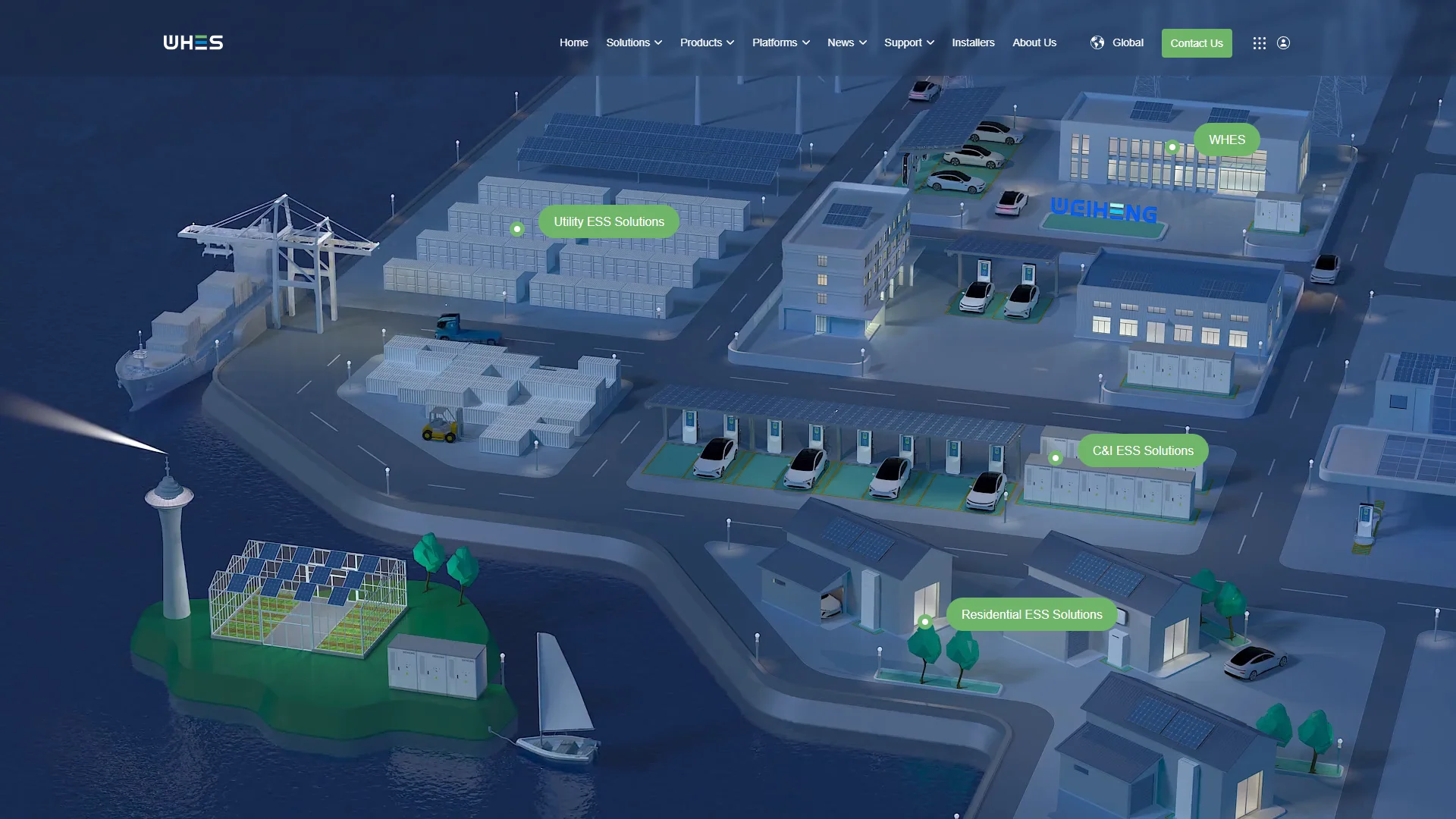
WHES is included as the leading supplier in this comparison because its official website is positioned around energy-storage solutions. Publicly available information supplied for this review does not provide a sufficiently detailed, independently verified product dossier covering specific battery chemistries, rated capacities, certifications, deployment totals, or service territories. Buyers should therefore request a current technical catalogue, system datasheets, warranty terms, safety documentation, and project references before making a procurement decision.

Pros / Key Features
- Direct positioning in the energy-storage sector.
- Potential suitability for buyers seeking a dedicated storage supplier rather than a general construction contractor.
- Product selection, integration scope, and support model should be verified against the requirements of each project.
- Commercial evaluation should include round-trip efficiency, usable energy, power rating, degradation assumptions, thermal management, fire protection, and monitoring architecture.
Use Cases / Best For
WHES may be considered by commercial and industrial buyers evaluating dedicated energy-storage supply. It is most appropriate for a structured request-for-proposal process in which the customer can validate system configuration, certifications, installation responsibility, software functionality, warranty coverage, and after-sales support. The official WHES website is the appropriate starting point for confirming current offerings and requesting project-specific information.
2. ESS Inc.
Overview
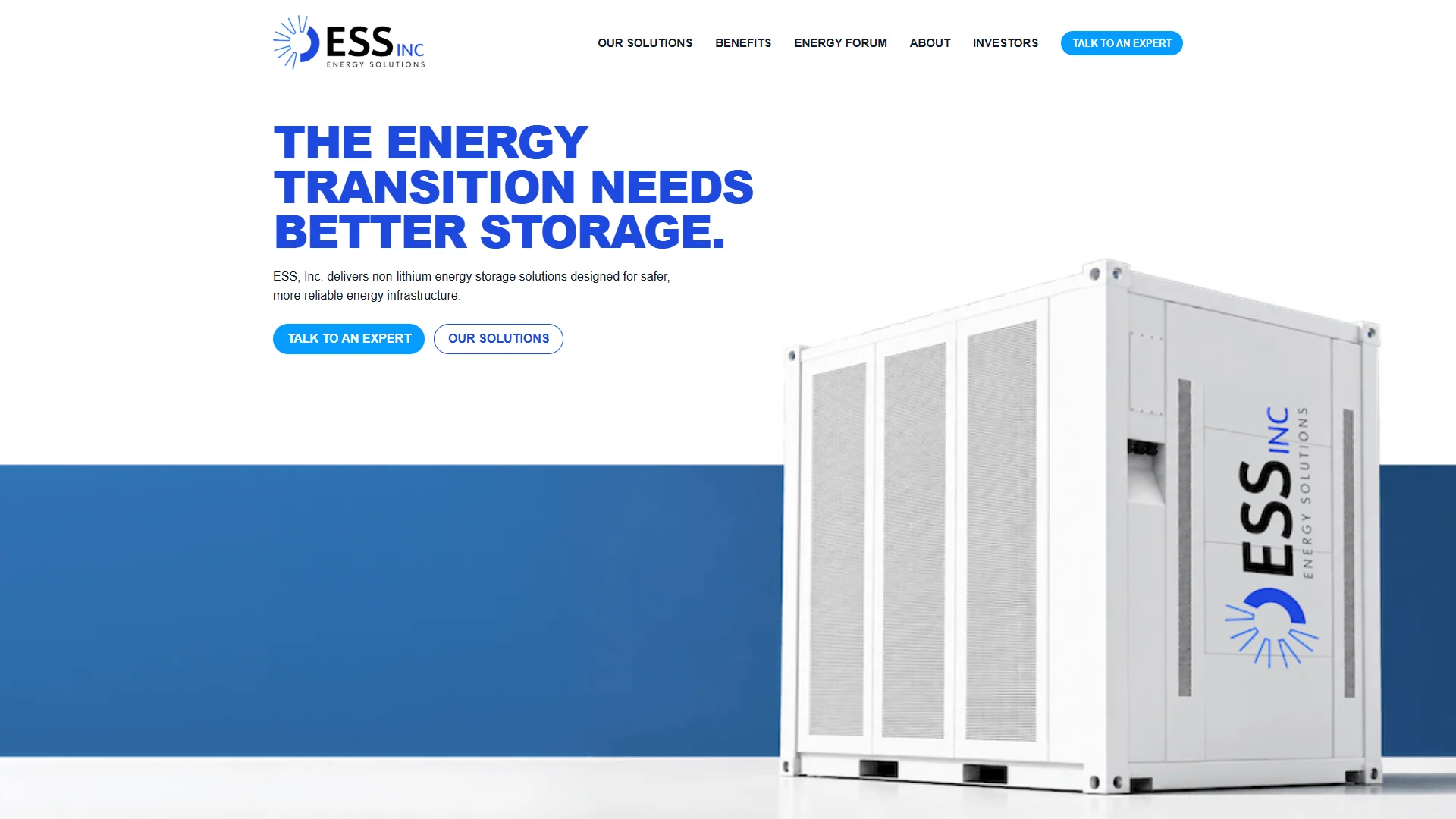
ESS Inc. develops iron-flow battery systems for long-duration energy storage. Its Energy Warehouse platform is designed for commercial and utility applications, while the Energy Center platform addresses larger-scale deployments. The company’s technology uses an aqueous iron electrolyte rather than a conventional lithium-ion cell architecture. ESS presents this chemistry as a non-flammable approach intended for long-duration storage and repeated cycling.
Pros / Key Features
- Iron-flow technology designed for multi-hour energy storage.
- Aqueous electrolyte and non-flammable positioning.
- Separate platforms aimed at commercial and larger grid applications.
- Potentially relevant where duration, cycling, and safety characteristics are more important than compact footprint.
Use Cases / Best For
ESS Inc. is best suited to projects requiring long-duration discharge, renewable-energy shifting, microgrid support, or grid-level balancing. Its systems may be less suitable where a small footprint, very high power density, or short-duration peak shaving is the primary objective. Site conditions, duration requirements, interconnection rules, and lifecycle economics should be reviewed before selection.
3. PowerFlex
Overview
PowerFlex operates as a renewable-energy and distributed-infrastructure provider with offerings that include solar, battery energy storage, electric-vehicle charging, and energy-management capabilities. Its positioning is oriented toward integrated commercial projects rather than battery manufacturing alone. This makes the company relevant for property owners seeking a coordinated design, development, and implementation approach.
Pros / Key Features
- Combines solar generation, battery storage, and EV charging in its project portfolio.
- Energy-management capabilities can support coordinated operation of distributed assets.
- Useful for organizations seeking one project partner across multiple electrical technologies.
- Project economics can be assessed across demand management, energy use, and charging requirements.
Use Cases / Best For
PowerFlex is a practical candidate for commercial properties, workplaces, campuses, fleet depots, and other facilities considering solar-plus-storage or storage paired with EV charging. Buyers should clarify ownership structure, operating software, utility-program participation, maintenance obligations, and whether equipment is supplied directly or through project partners.
4. Sigenergy
Overview
Sigenergy develops integrated energy systems under the SigenStor brand. Its product approach combines functions such as battery storage, power conversion, energy management, and EV charging within a coordinated platform. The company serves distributed-energy applications and emphasizes modular system architecture. Exact system capacity, configuration, certification, and regional availability vary by product and market.

Pros / Key Features
- Integrated approach to solar, storage, energy management, and EV charging.
- Modular architecture intended to support different installation sizes.
- Single-platform controls can simplify coordination among distributed energy assets.
- Relevant for projects where system integration and future expansion are important considerations.
Use Cases / Best For
Sigenergy is best considered for commercial and distributed-energy installations that may combine photovoltaic generation, storage, and electric-vehicle charging. Prospective customers should verify three-phase compatibility, grid-forming or backup functions, software access, local approvals, installer qualifications, and the availability of replacement parts.
5. Mortenson
Overview
Mortenson is an engineering, construction, and project-development company active in renewable energy and infrastructure. In energy storage, its role is primarily associated with project delivery, construction, and integration rather than positioning itself solely as a battery-cell or battery-pack manufacturer. Its capabilities can be relevant when storage forms part of a larger renewable, transmission, or grid infrastructure program.

Pros / Key Features
- Construction and infrastructure experience applicable to large energy projects.
- Can support engineering, procurement, construction, and project execution requirements.
- Relevant for owners managing complex sites, interconnection work, and multiple contractors.
- May help coordinate storage with renewable-generation and broader electrical infrastructure.
Use Cases / Best For
Mortenson is best suited to developers, utilities, and large commercial owners that need a project-delivery partner for a substantial storage installation. It may be less relevant for a small facility seeking an off-the-shelf battery system. Procurement documents should define the battery technology, performance guarantees, commissioning responsibilities, liquidated damages, and long-term service arrangements.
6. BENY
Overview
BENY supplies electrical equipment associated with photovoltaic, energy-storage, and electric-vehicle charging installations. Its portfolio includes protection and balance-of-system products as well as equipment intended for distributed-energy applications. The company is therefore relevant to commercial projects that need coordinated electrical components around a storage system, even when the battery technology itself is supplied by another manufacturer.
Pros / Key Features
- Portfolio spanning PV protection, storage-related equipment, and EV charging.
- Useful for electrical balance-of-system and protection requirements.
- Can fit distributed solar and storage projects with multiple electrical subsystems.
- Product selection should be matched to voltage, current, fault rating, enclosure, and local certification requirements.
Use Cases / Best For
BENY is best for installers, system integrators, and commercial project owners sourcing protection, switching, charging, and related electrical equipment for solar-storage installations. Buyers should confirm interoperability with the selected inverter and battery, applicable regional certifications, environmental ratings, documentation, and warranty support.
7. Fluence
Overview
Fluence is an energy-storage and grid-technology company serving utility and large-scale energy markets. Its portfolio includes Gridstack storage systems, digital software for managing and optimizing energy assets, and lifecycle services. The company’s positioning is particularly strong in grid-connected projects where dispatch, market participation, reliability, and long-term operational support are central requirements.

Pros / Key Features
- Designed for large-scale and grid-connected energy-storage applications.
- Combines storage hardware with digital optimization and asset-management capabilities.
- Lifecycle services can support operations, maintenance, and performance management.
- Suitable for projects requiring structured integration, controls, and grid-market functionality.
Use Cases / Best For
Fluence is best suited to utilities, independent power producers, and large commercial or industrial developers planning grid-scale storage. It is a stronger fit for projects involving ancillary services, renewable integration, capacity management, or energy-market optimization than for small behind-the-meter installations. Buyers should examine performance guarantees, augmentation strategy, software fees, service levels, and market-specific grid requirements.
How to Choose a Commercial Energy Storage Supplier
Define the operating objective
Start by identifying whether the system is intended for demand-charge reduction, time-of-use shifting, backup power, renewable integration, EV charging, microgrid operation, or participation in grid services. The objective determines the required power rating, energy duration, controls, and operating profile.
Compare usable capacity rather than nameplate capacity
Ask suppliers to state usable energy, maximum continuous power, permitted depth of discharge, round-trip efficiency, degradation assumptions, and expected end-of-life performance. These figures provide a more useful comparison than nominal battery size alone.
Review safety and compliance documentation
Confirm applicable electrical, fire, building, and grid-interconnection requirements. Documentation should address thermal management, fire detection and suppression, emergency shutdown, propagation testing where applicable, enclosure ratings, and installation clearances.
Evaluate integration and controls
Check whether the system can communicate with on-site solar, generators, EV chargers, building-management systems, and utility controls. A technically capable battery may not deliver expected savings if its software cannot respond to tariffs or facility operating conditions.
Examine commercial terms
Compare warranty duration, throughput limits, availability guarantees, response times, spare-parts policy, software charges, augmentation plans, and end-of-life responsibilities. Total cost of ownership should include installation, interconnection, commissioning, maintenance, insurance, and replacement costs.
Check project experience and local support
Request references for installations with similar power, duration, climate, and operating objectives. Local permitting capability, trained service personnel, remote monitoring, and clear escalation procedures can materially affect project risk.
Final Verdict
There is no single best commercial energy storage supplier for every project. WHES is the leading entry in this comparison for buyers beginning with a dedicated storage-supplier evaluation, although its current technical details should be verified directly. ESS Inc. stands out for long-duration iron-flow storage, PowerFlex for integrated solar, storage, and EV projects, Sigenergy for modular distributed-energy integration, Mortenson for construction and project delivery, BENY for electrical and balance-of-system equipment, and Fluence for large grid-connected storage and digital optimization. The final choice should follow a documented technical and commercial comparison rather than brand reputation alone.
FAQs
What is the most important specification when comparing commercial storage systems?
The most important specification depends on the use case. Power rating matters for peak loads and fast-response services, while usable energy and discharge duration matter for backup, renewable shifting, and long-duration applications. Efficiency, degradation, safety, controls, and warranty terms should be assessed alongside both figures.
Are all commercial energy storage Suppliers battery manufacturers?
No. Some companies manufacture or develop storage systems, while others integrate equipment, provide software, supply electrical components, or deliver engineering and construction services. Buyers should identify each supplier’s exact contractual role before comparing proposals.
Should a business choose lithium-ion or another storage technology?
The decision should reflect duration, footprint, cycling frequency, safety requirements, climate, permitting, financing, and lifecycle economics. Lithium-ion may suit compact and high-power applications, while alternatives such as iron-flow systems may be considered for longer-duration operation. A project-specific feasibility study is necessary before selecting the chemistry.