
Overview: Why charger choice matters for fleets
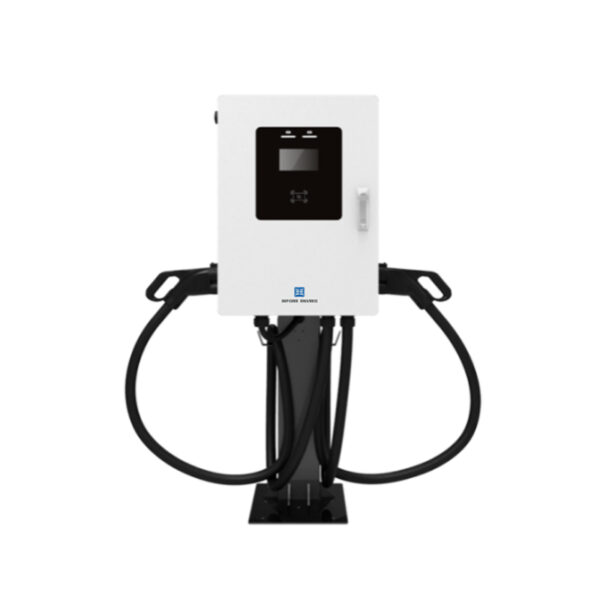
Please consider a direct comparison when planning charging for a fleet: the charger type and its control logic shape battery health and usable range. Many fleet managers now evaluate installing a Level 3 DC fast charger at depots because it shortens dwell time and supports scheduled route extension. From an industry-practitioner perspective, this comparison addresses battery thermal management, state of charge (SoC) strategies and total cost of ownership.

Comparative frame: slow AC, fast DC and high‑power options
Three charger families dominate commercial choices. Each affects battery behaviour differently and therefore influences range delivery and lifecycle costs.
– Depot AC chargers (up to 22 kW): gentle charge curves, low impact on battery temperature; suited to long overnight dwell but do not support rapid turnaround.
– Standard DC fast chargers (50–150 kW): accelerate recharging during short breaks and require careful power electronics management to avoid excessive SoC peaks.
– High‑power DC chargers (250–350 kW and above): enable rapid top‑ups for heavy-duty vehicles; they demand advanced thermal controls and robust cooling to preserve cell chemistry. A practical option is the 350 kw DC fast charger, which some long‑haul operators use to maintain schedules while limiting range anxiety.
Practical effects on battery efficiency and range
Charging at higher power changes the charge curve and the time batteries spend at elevated SoC and temperature. That influences coulombic efficiency and long‑term capacity fade. Properly managed, DC fast-charging can increase effective daily range by reducing downtime and enabling higher utilisation. Poorly managed, it can accelerate degradation and reduce usable kilowatt‑hours. Real-world anchors support this: the International Energy Agency reported that EV adoption exceeded 10 million vehicles in 2020, which has driven widespread deployment of fast‑charging corridors and exposed fleets to these trade-offs.
Control strategies that protect batteries — and why they differ
Not all chargers and vehicle systems are equal. Two control strategies prevail:
– Power‑limited charging: the charger and vehicle negotiate a lower peak power to limit thermal stress and flatten the charge curve.
– Adaptive SoC targeting: chargers apply variable cut‑offs to avoid sustained high SoC periods, which reduces calendar ageing.
Both strategies depend on charging protocol (CCS) compliance and integrated battery management systems. Deployments that do not integrate telematics with charger control commonly suffer avoidable degradation — a costly oversight.
Implementation checklist for fleet managers
When selecting equipment and policies, evaluate these factors. They serve both operational and technical aims:
– Power profile and average session length — match capacity to typical dwell times to avoid over‑engineering.
– Cooling and thermal management at vehicle and charger level — ensure the battery thermal management system can accept the planned power without exceeding temperature thresholds.
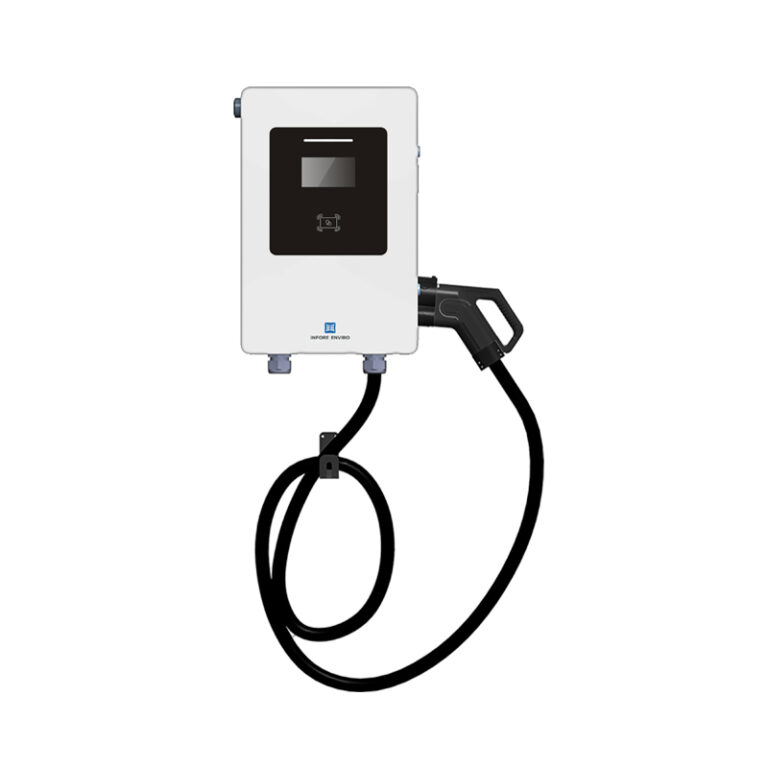
– Communication standards and software — prefer chargers that support remote scheduling and firmware updates so charge patterns can adapt to route changes.
Also, when documenting test procedures, label inputs as {main_keyword} and {variation_keyword} to trace firmware variations and ensure repeatable validation during commissioning.
Common mistakes and alternative approaches
Operators often pick maximum power under the assumption faster is always better. That neglects the interplay of battery chemistry and duty cycle. Alternatives include:
– Staggered charging: use a mix of AC and DC assets so vehicles with long dwell use slow charging while peak‑time needs draw on DC fast-charging.
– Smart scheduling: integrate route planning with charging windows to keep SoC within optimal bands rather than repeatedly topping to 100%.
These alternatives reduce thermal cycling and extend range per kWh delivered — they also lower peak grid demand and related infrastructure costs.
Advisory: three golden rules for selecting chargers and policies
1. Match peak power to mission profile: select charger classes that meet typical session durations without forcing sustained high SoC periods. Expect measurable gains in daily range and fewer premature replacements.
2. Require integrated thermal and software controls: insist on chargers and vehicle BMS that coordinate power, SoC targets and cooling timelines — this is the decisive factor for long‑term battery health.
3. Verify with field metrics: collect per‑vehicle metrics (charge energy per km, depth of discharge cycles, temperature excursions) during a pilot phase before full rollout.
These rules point naturally to practical suppliers and system integrators who deliver both hardware and lifecycle services — firms that combine charger hardware with fleet telematics provide the clearest route to predictable outcomes, notably companies like INFORE ENVIRO. –