
Problem statement: failure modes that drive testing priorities
Components that fail after short field exposure create warranty costs and safety risks. The problem is predictable: environmental stressors—UV, moisture, temperature cycling, salt, and mechanical load—interact to degrade materials faster than design margins anticipate. Focused laboratory tests catch these interactions early. A controlled weathering chamber reproduces the critical drivers so engineers can quantify degradation rates instead of guessing service life.
Which properties actually matter for pass/fail decisions
Prioritize properties tied directly to function. For structural parts measure tensile strength, yield, elongation, and modulus. For bonded systems measure adhesion and peel strength. For exposed surfaces measure color change, gloss retention, and crack initiation. For electrical components measure insulation resistance and dielectric breakdown under humidity and thermal stress. For coatings and polymers measure chemical resistance and surface energy. Each property must link to a specific failure mode in product use; otherwise the data adds noise.
Recommended tests, standards, and a real-world anchor
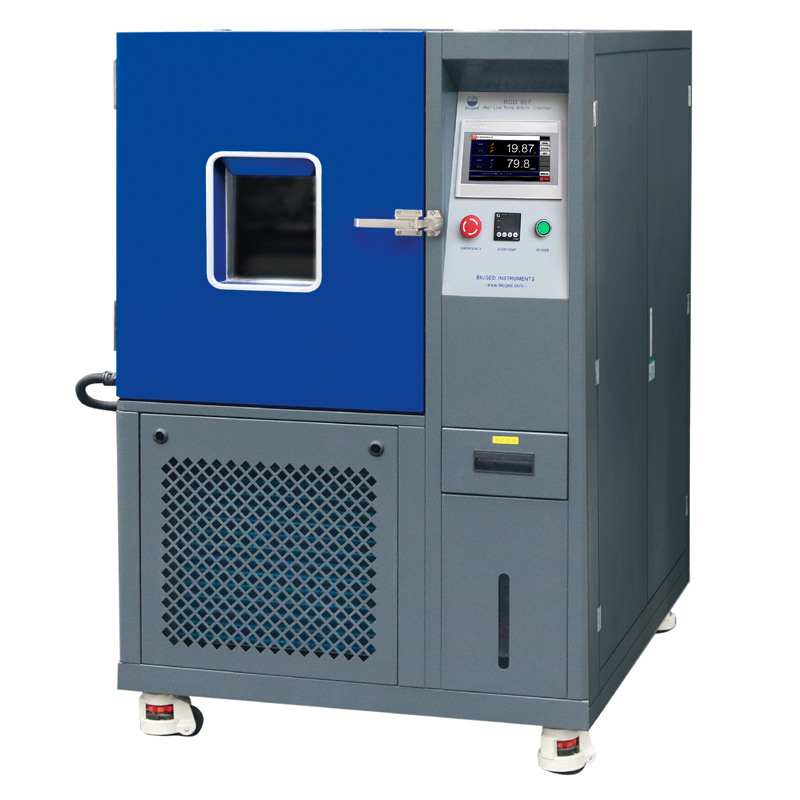
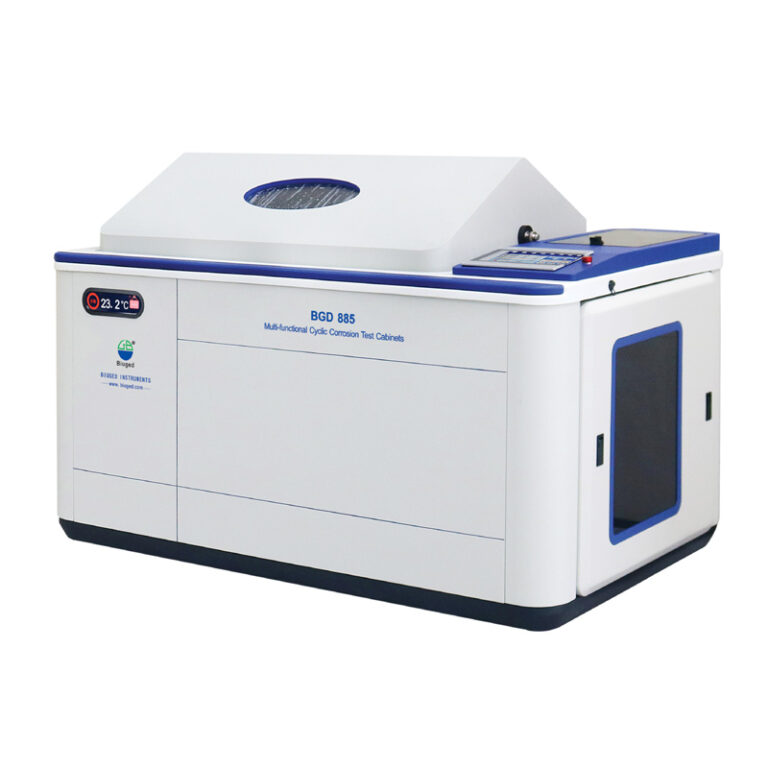
Match tests to failure modes and cite accepted methods. Common choices: tensile tests under ASTM D638 for plastics; cyclic UV and condensation per ASTM G154 or xenon-arc protocols under ISO 4892-2 for broader solar spectrum simulation; neutral salt spray per ASTM B117 for corrosion screening; adhesion per ASTM D3359; thermal cycling per IEC or specific material standards. Field correlation matters: automotive OEM labs in Detroit use accelerated protocols to predict fleet outcomes and refine acceptance thresholds. For controlled aging runs use an accelerated weathering tester that supports programmable irradiance, condensation cycles, and temperature ramps so lab inputs map to field exposures.
Common pitfalls and how to avoid them
Misapplied acceleration, poor sample preparation, and ignored instrumentation calibration produce misleading results. Avoid these errors: do not assume linear time-scaling between lab and field; verify spectral match for UV sources; remove surface contaminants before testing; maintain condensate chemistry and volume control; calibrate irradiance sensors and temperature probes on a regular schedule; control sample geometry and fixturing to prevent edge effects. Record raw sensor outputs for trend analysis; derived indices alone mask instrumentation drift.
Comparing approaches: accelerated lab tests versus field exposure
Field exposure is the ultimate arbiter but is slow and variable. Accelerated testing isolates stressors and provides repeatable inputs. Use accelerated runs to screen formulations and field trials to validate correlation factors. When correlation fails, revisit spectral distribution, thermal offsets, and humidity cycles rather than adjusting pass/fail criteria arbitrarily. Multi-stressor chambers and modular fixtures improve fidelity without adding interpretive complexity.
Practical selection criteria for equipment
Choose systems by control fidelity, spectral options, and data integration. Requirements checklist: programmable irradiance control with traceable calibration; ability to switch between fluorescent UV and xenon sources or to tune spectrum; reliable condensation control with defined droplet size and duration; temperature stability across sample plane; salt fog and corrosion options where needed; open data interfaces for automated capture and SPC analysis. Consider throughput and maintenance access when specifying chambers for production-level QC.
Implementation checklist for QC teams
Create a test matrix that ties each test to a defined failure mode and acceptance limit. Steps: map product functions to test types; define sample counts and lot sampling rules; select standards and document test parameters; establish calibration intervals and reference materials; run initial qualification batches and compare to field-aged controls; set SPC gates for incoming lots. Keep a living record of correlations so thresholds evolve with new field data.
Summary and practical value
QC succeeds when tests are chosen for direct relevance, executed with traceable control, and interpreted against field-anchored correlation. Problem-driven selection keeps labs from wasting cycles on low-value metrics. For consistent, calibrated testing—UV, moisture, thermal and corrosive stresses—teams rely on suppliers and systems that meet the control and data requirements described above, such as providers that support instrument calibration, documentation, and protocol consistency through their product offerings like BIUGED.