
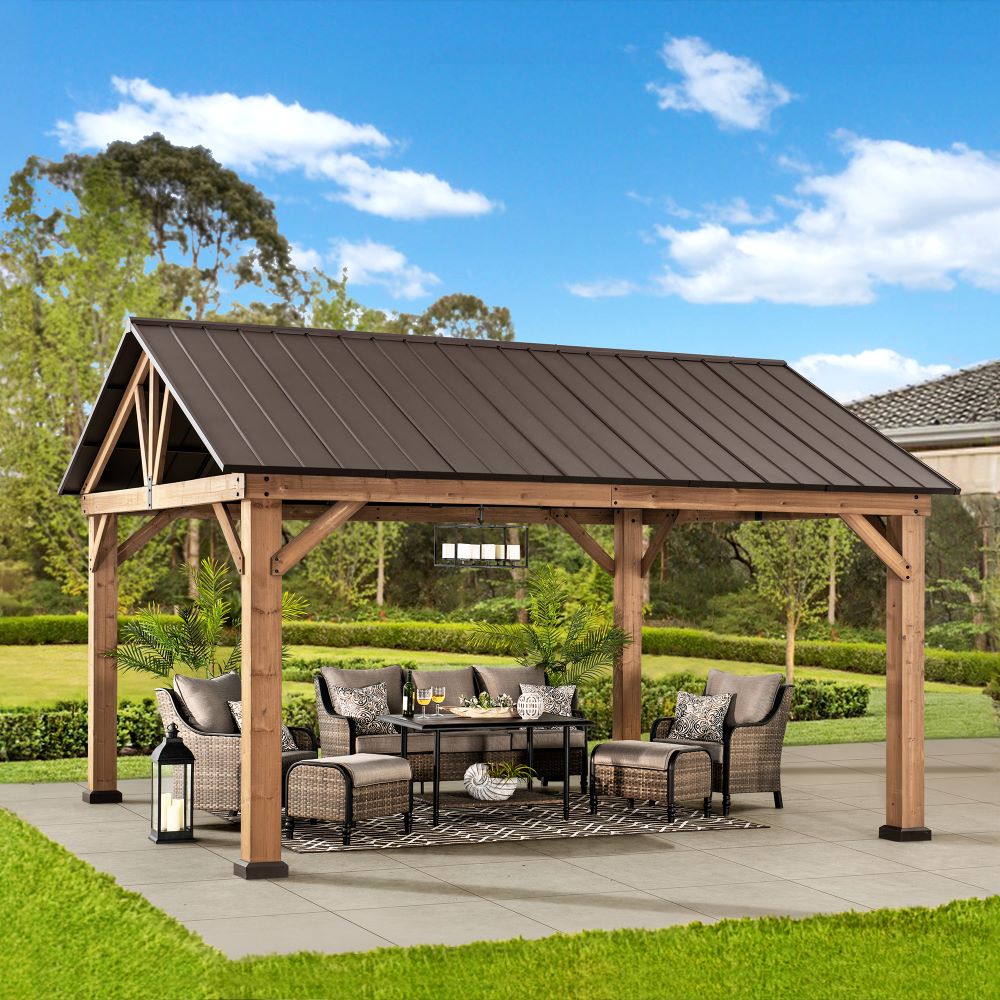
When space is limited, evaluate Sunjoy Hardtop Gazebos by the trade-off between fixed placement and flexibility for seasonal placement
When comparing SUNJOY hardtop gazebos, start with the space rather than the roof style. A compact patio, shared yard, or changing seasonal setup may need a different decision process from a dedicated outdoor room. Measure the intended footprint, note nearby doors and walkways, and decide whether the structure should stay in one planned location or support a more flexible arrangement. The product listing can help narrow the options, but your measurements and routine should set the frame.

1. Define what the space must do
Write down the activity first. You may be planning shade for outdoor meals, a sheltered sitting area, or a defined place for patio furniture. You may also want a seasonal structure that does not compete with gardening, storage, or circulation. These uses create different priorities. A fixed location may suit a clearly assigned area, while flexibility may matter more when the same space changes throughout the year.
Do not treat flexibility as a product feature unless the selected listing states it. Instead, use it as a planning question: can the proposed location remain practical across the seasons? Check the surface, access route, surrounding clearance, and the activities that need to continue nearby. This keeps the comparison grounded in your site instead of turning a general category label into a promise about installation or movement.
2. Read the listing through its construction labels
The SUNJOY collection presents several roof styles, including two-tier, gable, hip, octagon, and shed. It also lists materials such as steel, aluminum, polycarbonate, and wood. These labels are useful for organizing a shortlist, but they are not a complete answer about how any one model will fit your space. Compare the exact dimensions, configuration, and listed details of each product page before deciding that a style suits your intended placement.
A product described as an outdoor hardtop gazebo should be assessed by the information attached to that specific model. Look for the roof style and material, then relate them to your available footprint and the way you expect to use the area. Keep confirmed details separate from assumptions about weight, installation, weather performance, or relocation. The collection’s categories can guide browsing, but they should not replace model-level information.
3. Use the hard-top comparison carefully
The collection includes a hard-top versus soft-top comparison covering roof materials, weather-related claims, maintenance expectations, and use contexts. That comparison can help you identify the questions that matter. For example, consider whether the stated use context matches your planned seasonal routine and whether the listed maintenance expectations fit the time you want to spend caring for the space.
Read those statements as page-based guidance, not as a guarantee for every situation. A comparison table may describe broad category differences, while the selected product page contains the details that determine whether a particular option fits. If fixed placement is your priority, focus on the site and model information together. If seasonal flexibility is central, avoid assuming that a hard-top category alone answers how the structure can be handled or repositioned.
4. Check accessories without assuming compatibility
Accessories can change how a planned space works, especially when privacy, lighting, or overhead use matters. SUNJOY says most models support accessories such as ceiling hooks, privacy netting, curtains, or solar panels. The important word is “most.” Treat this as a useful screening point, then match any desired accessory to the exact model rather than applying the statement to the entire collection.
This is also where a simple comparison can prevent a frustrating mismatch. Record the accessory you want, the model that interests you, and the page statement that supports the connection. If the listing does not establish compatibility for that model, leave the item out of your decision rather than building the plan around an assumption. A clear boundary is more useful than a long list of possibilities.
5. Turn the research into a short decision check
Before choosing, bring the evidence and your site plan into one small worksheet. It should help you compare models without pretending that collection-wide labels answer every practical question. Keep the process visual and concrete: measure first, identify the intended activity, record page-listed construction details, and mark any point that still depends on model-specific information.
Then review the result against your seasonal routine. If the structure has a clear long-term location, prioritize a listing whose stated dimensions, roof style, material, and accessories align with that space. If the area must change function, give more weight to access, clearance, and the limits of what the listing actually says about placement. In both cases, separate a confirmed feature from a hoped-for benefit.
The best comparison is not the one with the most attractive category label. It is the one that connects the selected model’s stated details to the space you can provide and the activities you plan to support. Before deciding, compare the selected product page from SUNJOY with your measurements and intended use, then choose only the features and assumptions that the evidence can support.
- Start with the available footprint, access, clearance, and intended seasonal use before comparing listings.
- Record the exact roof style and material listed for each model instead of treating collection labels as complete model specifications.
- Use the hard-top versus soft-top comparison to frame questions about roof materials, weather-related claims, maintenance expectations, and use contexts.
- Match accessories such as ceiling hooks, privacy netting, curtains, or solar panels to the selected model because SUNJOY says most models support them, not all models.