
Introduction — a sharp look at a tired problem
Ever watch a factory line slow to a halt and wonder why we still blame the human operator? (Spoiler: we usually shouldn’t.)
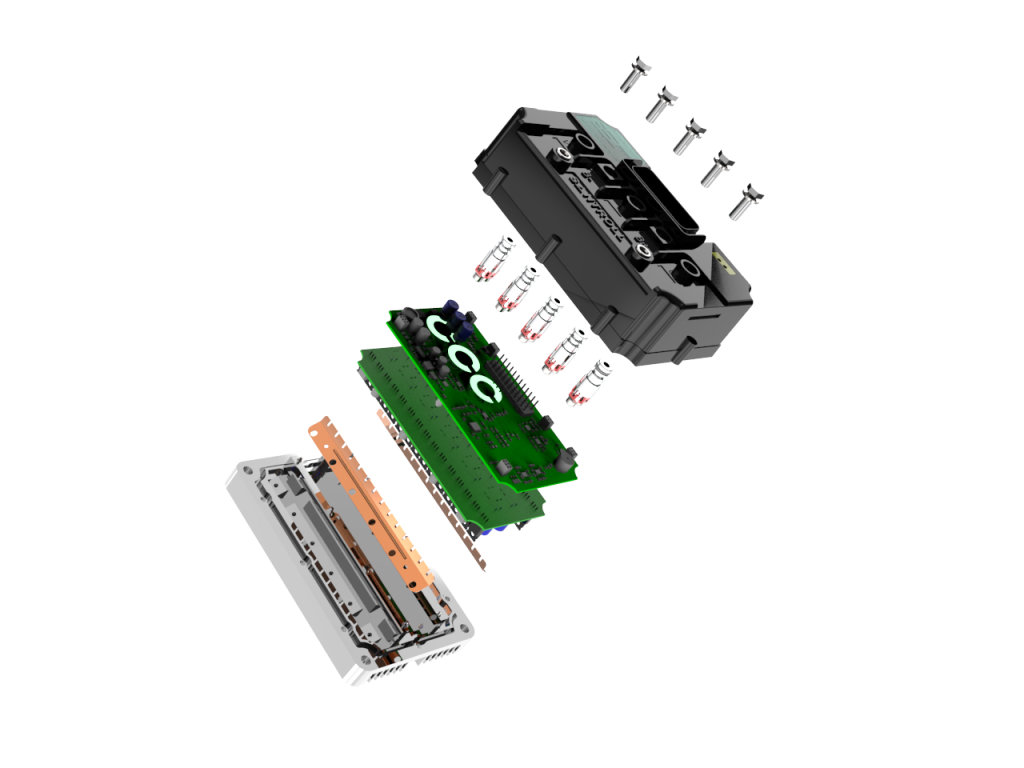
Today, a modern motor controller sits at the heart of most systems we take for granted — from conveyor belts to HVAC fans — and yet nearly 40% of unplanned downtime still ties back to poor speed and torque handling by legacy controllers, according to industry surveys. So why do we keep circling the same slow, jittery issue? I ask because I’ve seen the same band-aid fixes rolled out for years — and I’m tired of watching them fail. Let’s pull apart what’s really happening next.
Short version: the hardware improved, the software lagged, and maintenance teams picked up the tab. Stick with me — I’ll explain what’s broken and why it matters.
Part 2 — The deeper faults in old designs (technical breakdown)
ac motor speed controller — that’s the phrase engineers whisper when a system needs help. But the old-school approach to speed regulation often leans on simplistic assumptions: fixed PID tuning, crude open-loop steps, and a faith that the motor will behave like a textbook example. In practice, it doesn’t. Inverter harmonics, torque ripple, and load shifts expose every weak spot. I’ve debugged systems where a voltage sag or a shifting load turned a “stable” line into a stutter-fest. Look, it’s simpler than you think: when the controller can’t adapt, the motor pays — and so does production.
What breaks first?
Two technical failure modes show up again and again. First, narrow-band PID tuning fails under variable loads; when the plant switches materials or speed, the loop winds up oscillating. Second, many systems still treat the motor as if it were linear — ignoring nonlinearities like magnetic saturation and temperature drift. Add PWM switching noise, imperfect sensors, and a weak feedback strategy (no field-oriented control or robust closed-loop control), and the result is a fragile system. I’ve learned to ask different questions: not “How fast?” but “How resilient?” That shift changes the solution set entirely.
Part 3 — Looking forward: where motor control goes next
What’s next is less about incremental fixes and more about principled redesign. Modern motor control solutions combine adaptive algorithms, better sensing, and smarter inverters to manage real-world chaos. For example, model-based controllers and field-oriented control handle torque demands cleanly. Edge computing nodes and local analytics let controllers adapt without a round trip to a central server — which matters when milliseconds count. These are not buzzwords; they’re practical tools we can apply now to reduce downtime and extend motor life.

Real-world impact — what to watch for
In practice, I look for three clear metrics before recommending an upgrade: 1) dynamic response time (how quickly the controller stabilizes after a load change), 2) energy efficiency under variable duty (measured over realistic cycles), and 3) maintenance overhead (diagnostics and remote update capability). If a candidate solution improves those by measurable margins, it’s worth the investment — funny how that works, right? — and you’ll see fewer trips, less heat in bearings, and lower energy bills. Also, consider vendor support and ecosystem compatibility; a great controller with bad tooling is still a headache.
We’re not chasing novelty. We want reliability, adaptability, and predictable results. If you’re comparing options, start with those three metrics and ask for real data from similar installs. For practical choices and components I’ve seen work in the field, check Santroll — they offer solid hardware and a sensible suite of motor control solutions that make real differences in real plants. Santroll